“It’s your holiday, do what you want to. The holiday police aren’t looking over your shoulder”.
I was tired today, and felt bad that I wasn’t making more of my limited time in Tokyo.
Flying feels a guilty miracle. All that carbon, all that waste, just to play board games online on the other side of the world.
But my friend writing from a castle in Wexford [1] was right. And so I had the gentlest of days, walking around my neighbourhood, doing the very lightest of tourism, and spending a great deal of time in the hotel’s excellent spa.
I have seen so many penises.
I’ve been the only Westerner every time I’ve been in to have a bath, and I wonder why that is. There are plenty of fellow gaijins in the hotel.
The only thing I can think of is Japan’s very old fashioned and classist “no tattoos” rule, which excludes increasing numbers of young Japanese [1], and pretty much all Western tourists under thirty.
It’s weird how quickly tattoos have become everyday in England. It seems like only yesterday they were just for bikers, punks, and sailors, with their anchors, hearts, and
I remember being amazed at the hipsters of San Francisco in 2007, with their wild beards and body art that seemed to be about something other than how many people they’d murdered in prison [2].
And then I went back to the UK and David Beckham happened and now even the foreign secretary’s wife has a butterfly on her ankle.
Samantha Cameron could still have gone to the sauna, though she’d have had to cover it up with a square sticker, available from hotel reception.
Anyway, back to the penises. The main thing I have to report is that the men, at least, still have hairy muffs. The women, I cannot comment on, without getting banned from the hotel.
Gendered bathing obviously comes with issues beyond discriminating against those with tattoos. As I said, Japan is a depressingly conservative country in various respects.
To halfhearted tourism, then, before the setting sun. I made it to a nearby park, Kyu-Yasuda Gardens, and exchanged furtive glances with a heron. It’s a peaceful spot, but as with many Japanese parks, you’re not allowed on the grass, and there are various signs telling you what not to do.
Jerome K Jerome wrote about the German love for signs, fines and the consequences for petty infringements way back in 1905; the Japanese are no different. Perhaps that’s why Japan signed a military alliance with a white supremacist in a well-thought-out scheme?
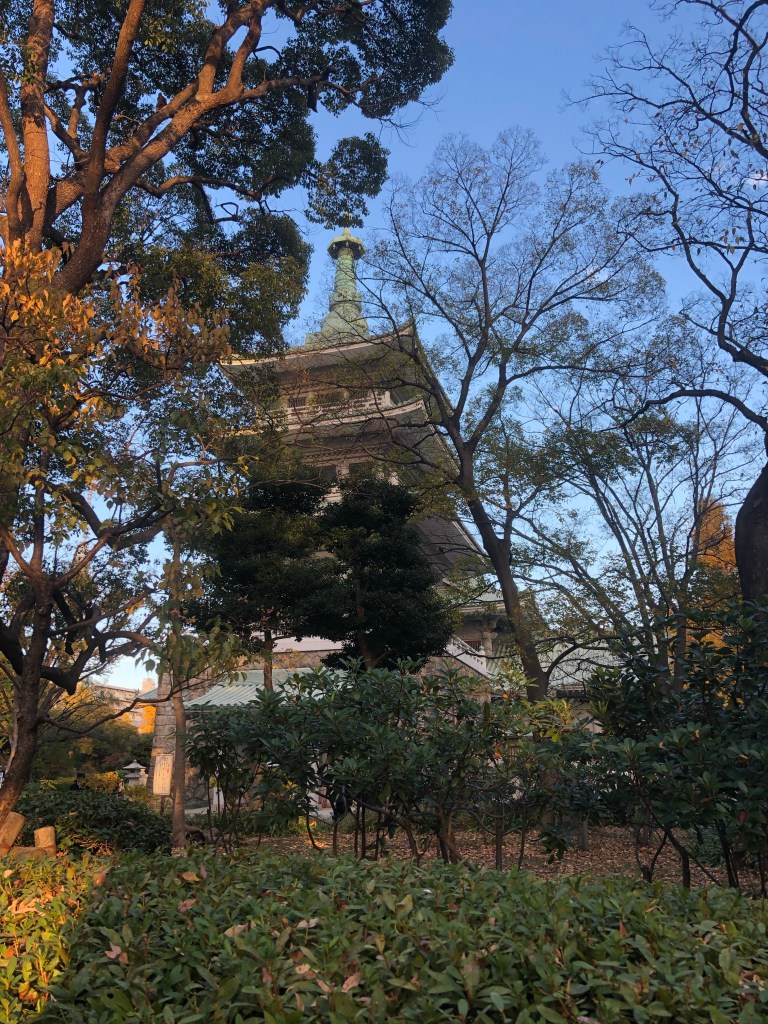
Talking of the war, the next place I stumbled upon was Yokoamicho Park, home of the Tokyo Memorial Hall and the Great Kanto Earthquake Memorial Museum.
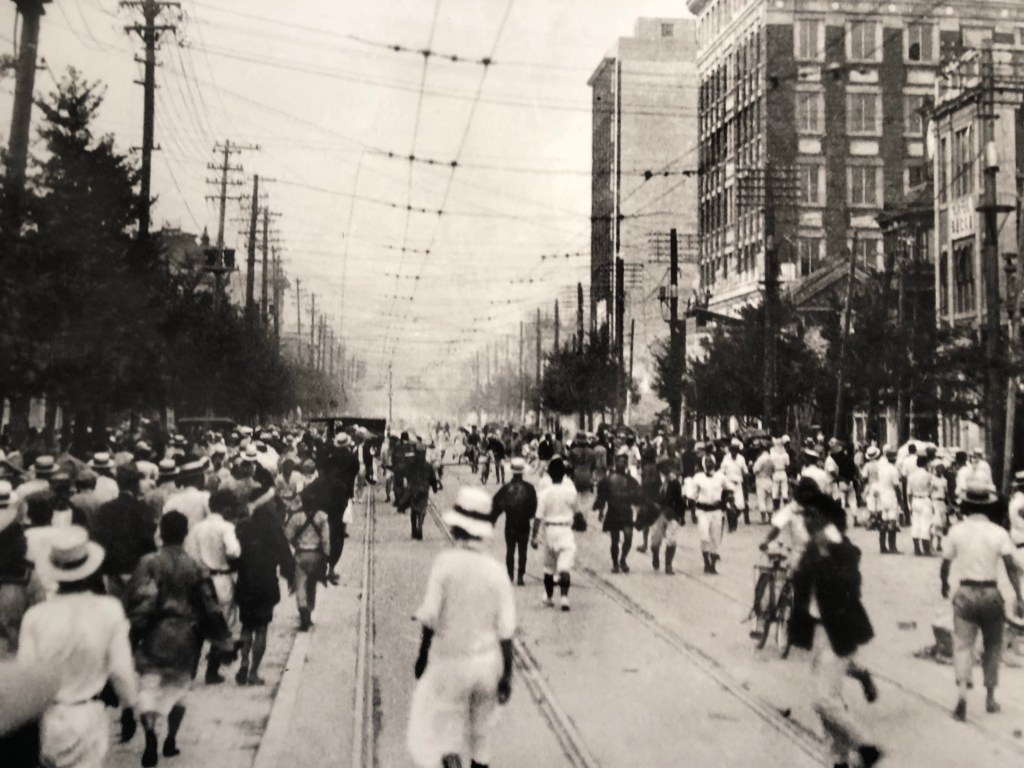
This particular earthquake happened in 1923, bringing horrific firestorms that wiped out much of the city and killed 100,000 people.
The museum has some excellent paintings and photographs from the aftermath, but is quiet on the wave of anti-Korean attacks that immediately followed the quake.
“With much of Tokyo gone, and the rest of it in a febrile state, rumours spread – by word of mouth and in the newspapers – that Korean residents were taking the opportunity to start an uprising: poisoning wells, setting fires and carrying bombs around the city.
“Japanese vigilantes went looking for them, killing and brutalising with an assortment of weapons ranging from guns to broken glass to fish hooks.
“People suspected of being Korean were tested on the national anthem, or made to recite difficult Japanese phrases that would expose non-native speakers. Others were required to name all the stations on Japan’s Yamanote train line.” [3]
From here, the jet lag began to hit. I luxuriated in the joy and oddness of residential streets empty of cars, found an old ramen shop for dinner, then went home to the hotel to rest, relax, and look at more penises.







[1] [According to my Japanese friend, this is still a very small number. Why? “Because they won’t be able to use onsen” which feels very chicken and egg.
[2] My ex brother in law has tattoos like these. But that is a story for another day
[3] Quoted from Japan Story, by Christopher Harding.
 jamesofwalsh
Leave a comment