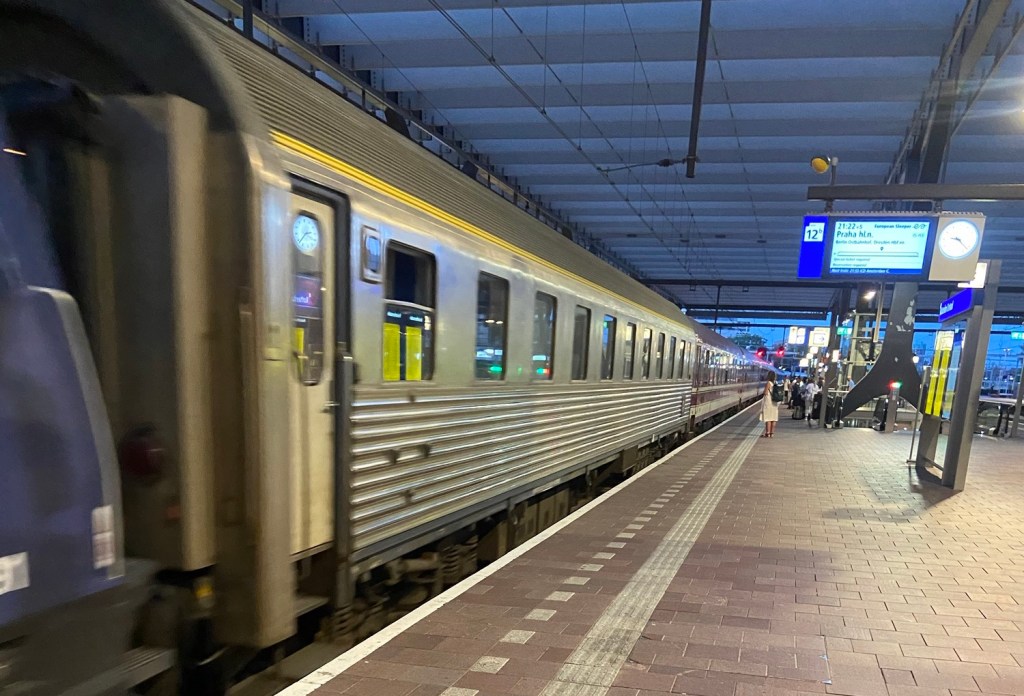
Last time, I came to Berlin via the night ferry and then a day train from Amsterdam.
It’s now possible to flip reverse it: the day sailing from Harwich, and then a sleeper from Holland. [1]

My journey started at 5:25am in Furzedown, near Tooting Common, with Murphy the dog forlornly watching me get underway. I walk past the dawn foxes and their scattered bins, to a bus taking workers [2] to the kind of jobs our society prefers to be done in the shadows.
The 6:30 train to Harwich is almost deserted. There’s a young homeless man sleeping his way up and down the line, and a handful of dazed city types heading home after all-nighters of watching numbers on a screen.

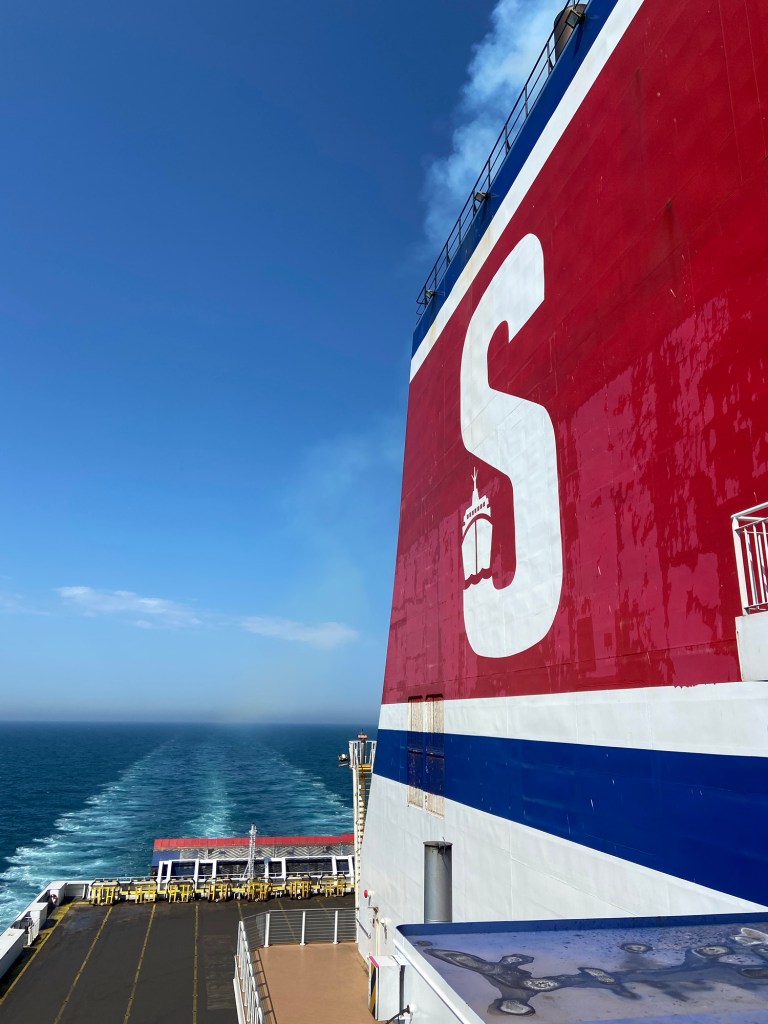
The journey to Harwich International passes in an early morning blur of sun, glorious countryside and a final, marshland approach to the big-bellied beasts of the Stena Line.
There are three rail and sail passengers joining the small foot passenger queue. [3] Harwich International Station, proud but crumbling in the morning light, was built for better days.

Security is relaxed and brief. The local lads on the possession-scanning conveyor talk cheerfully of the dangers of hungover football, and after a quick border check – this is not an airport – a long ol’ footbridge brings us straight into the belly of the ship.
The Stena Hollandica is full of excited children and dogs. The dogs are imprisoned in kennels for the duration; the kids get to run around freely. Is this the correct way of doing things? Write to Stena with your views.
I doze off on a nice soft seat surrounded by cheerful families chatting nonsense and generally letting off steam. [4]
I wake a few hours later to a Dutch couple seemingly staring directly at me. Is this a kink thing?
No. It turns out their attention is drawn to the muted television above my head, which is displaying a strange English ritual known as Bargain Hunt.
Mildly perturbed, I go sit outside on deck in a quiet spot, and read a chapter of my book about an early Japanese Empress-Shamen. I eat a sandwich. I watch the world go by.
Is this… relaxation? Or a performative attempt at relaxation? Either way, I’m having a nice time.

The interchange at Hook of Holland is super easy – they’ve built a new station directly opposite the terminus, so there isn’t the awkward walk down to the temporary platforms any more.
The tram into town is stuffed full of diverse local families ok their way back from a day at the beach, and the air conditioning isn’t working. Yeah, on the hottest day of the year. Shirts and hats become impromptu fans. I distract myself gazing at all the cycle lanes and well designed public housing estates – we’re not in Kansas any more – that follow the tracks into town.


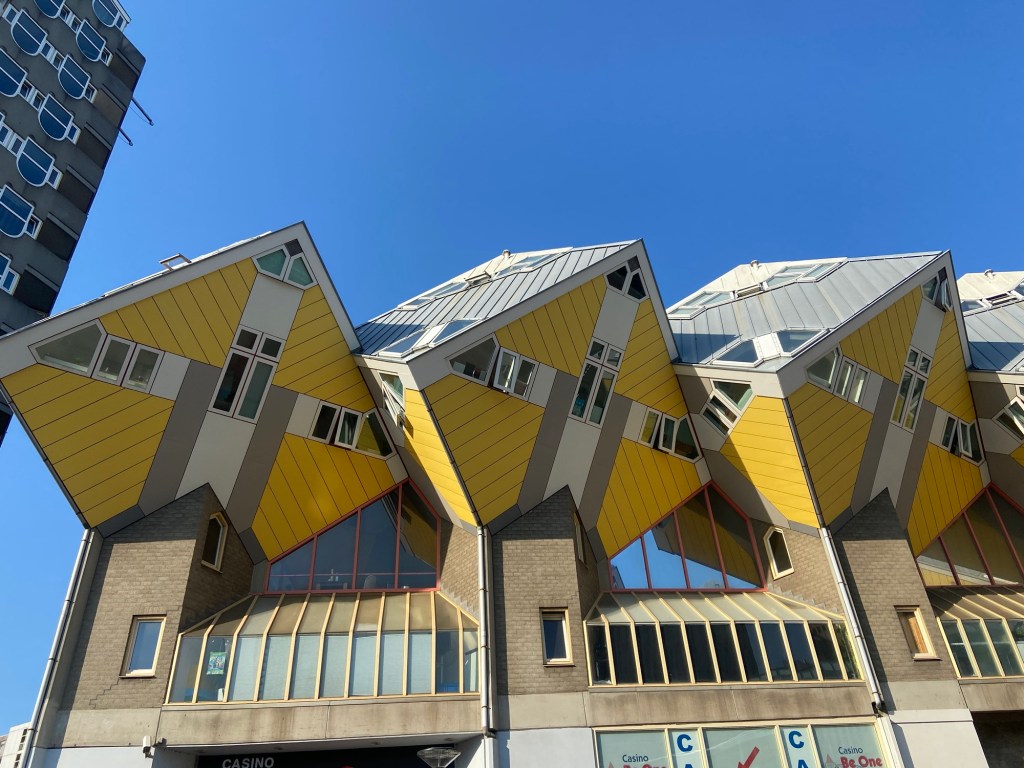
I’ve got a few hours to kill before my night train, so I go exploring. Rotterdam is an interesting city – an obvious port town, with its Chinatown and mix of warehouses, old merchant townhouses, and new developments. It reminds me of Liverpool, though that is post-industrial – here, the docks are very much still in operation.
I settle in a craft beer bar in the courtyard of a brutalist precinct near the centre.
I’ve written before about how a lot of Northern Europe feels like a cruel joke to Englanders: here’s what we could have had, if we didn’t deliberately spend fifty years privatising and running down our public realm.
I’m aware The Netherlands has its own problems [5], but sat under leafy trees in a happy and traffic-free street, this feeling is particularly pronounced.
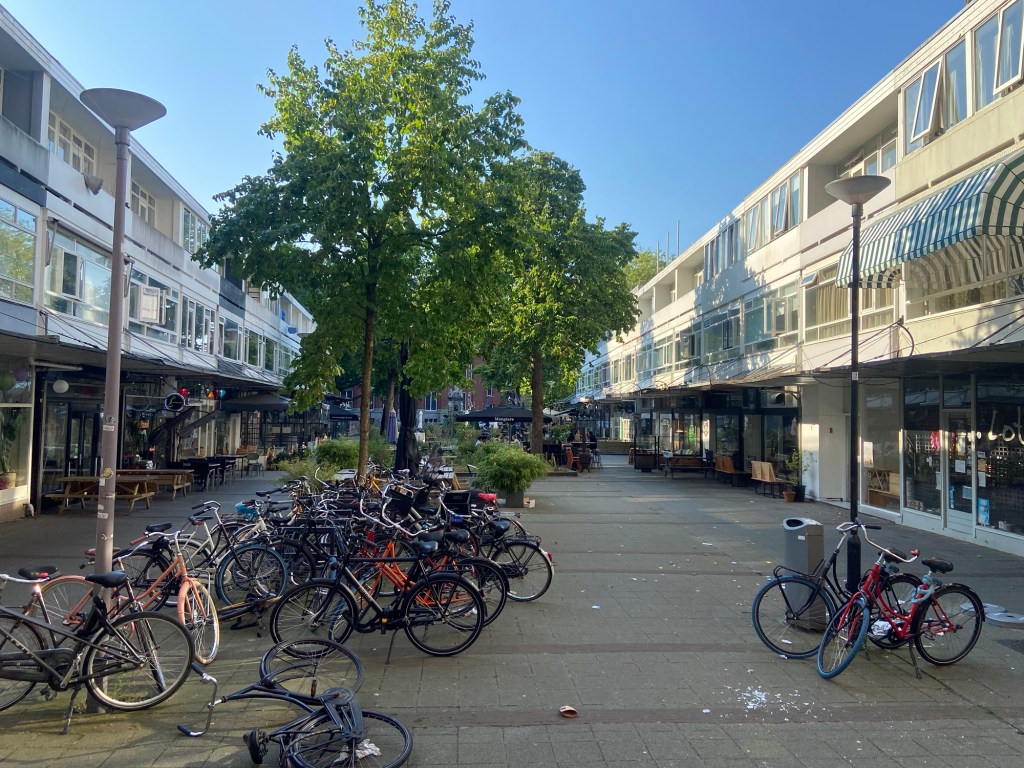


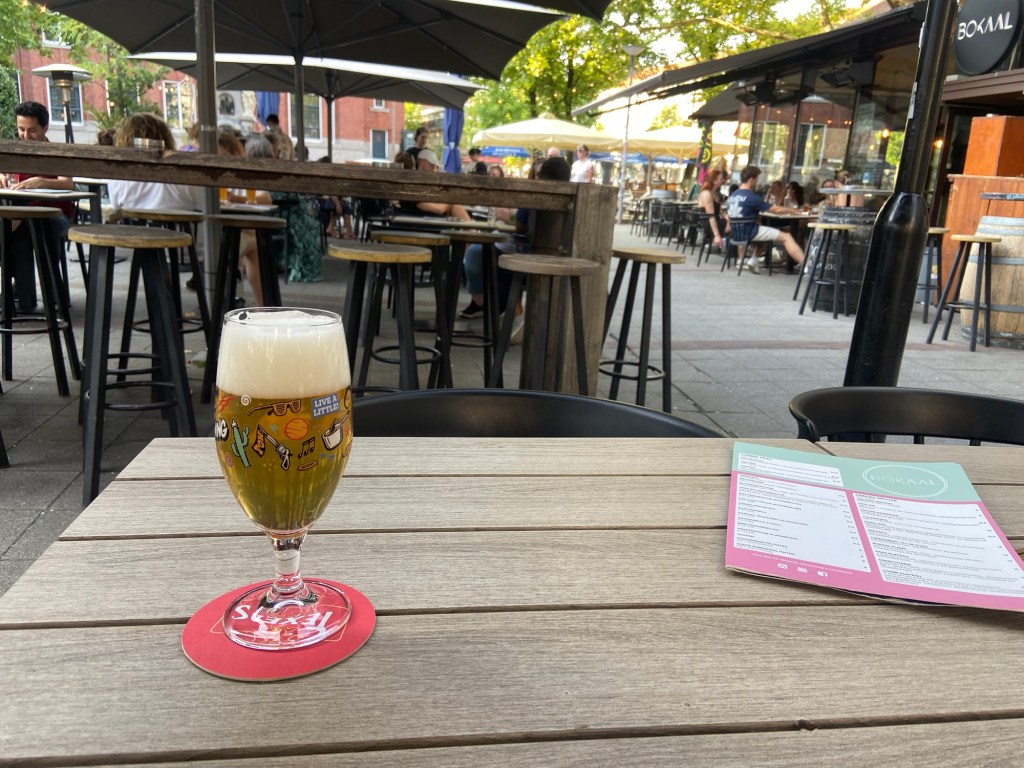
I try to imagine a similar sized English city – say, Bristol – with its own subway, trams, and this level of integrated walking and cycling infrastructure. I can’t. We’re decades behind.
Ah well. I pass the preposterously enormous cycle park and hop on a train back to Rotterdam Centraal, and festoon myself with drinks and snacks before heading to the platform for the European Sleeper.
Trans. Europe… what’s the opposite of express?
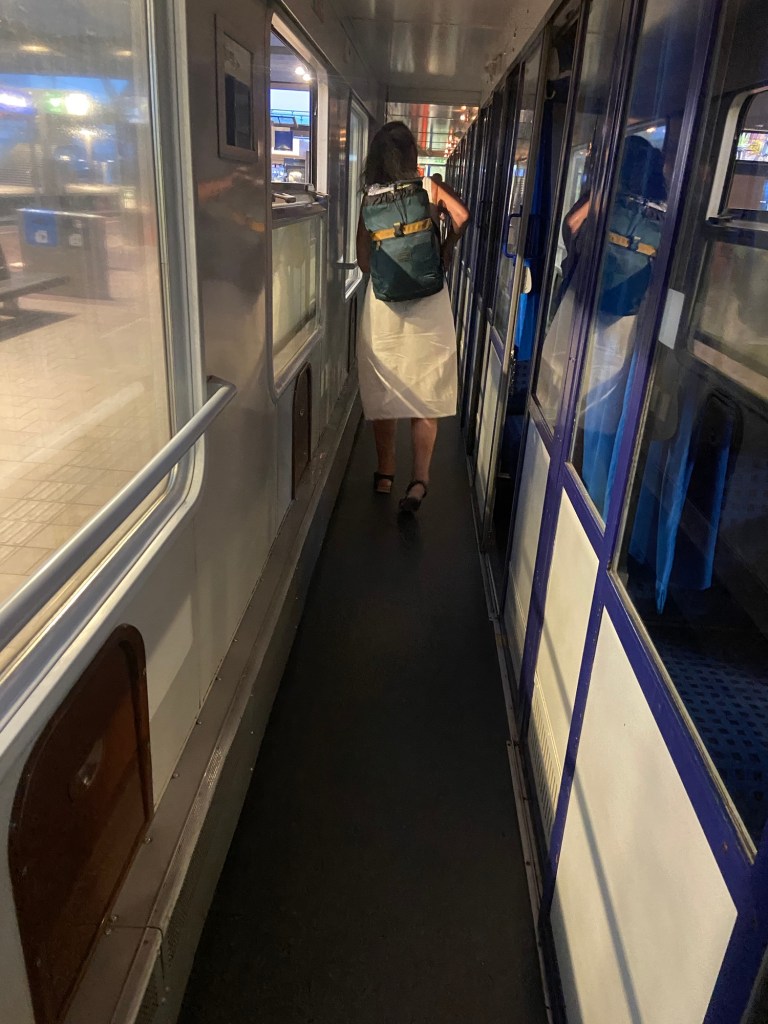
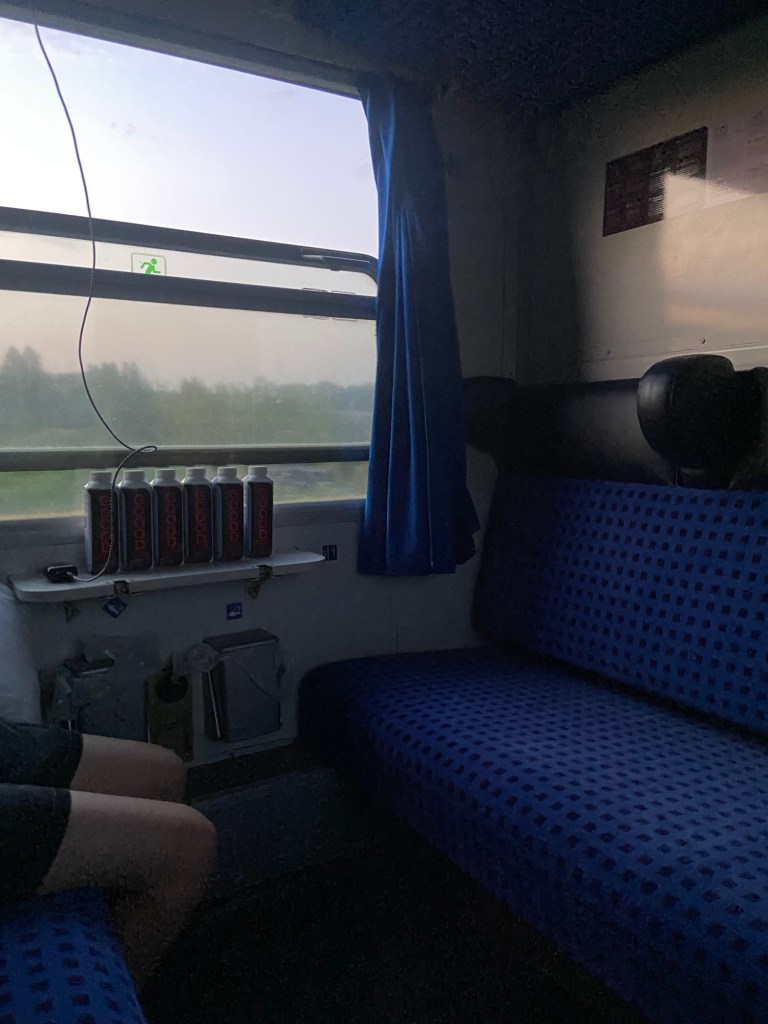
It’s a delightful, clunky old train. No air conditioning – these are 1980s Slovakian carriages, giving the whole train the vibe of the kind of place Roger Moore might be attacked by rival spies while uncomfortably bedding some unlikely beauty.
Instead, my couchette contains a very funny, ironic young German lady, and we’re joined by a Mexican-American couple and their teenage children at Amsterdam, who are baffled and slightly horrified by sharing their compartment with strangers.
The train, generally, is loud and full of excited young inter-railers, from terrible countries like America. They are happily slumming it, enjoying the novelty, and drinking plenty of cheap beer and wine. I can’t blame them: I’d be doing exactly the same if I were young. And anyway, I have the bottom berth, and a hat and headphones to hide behind.
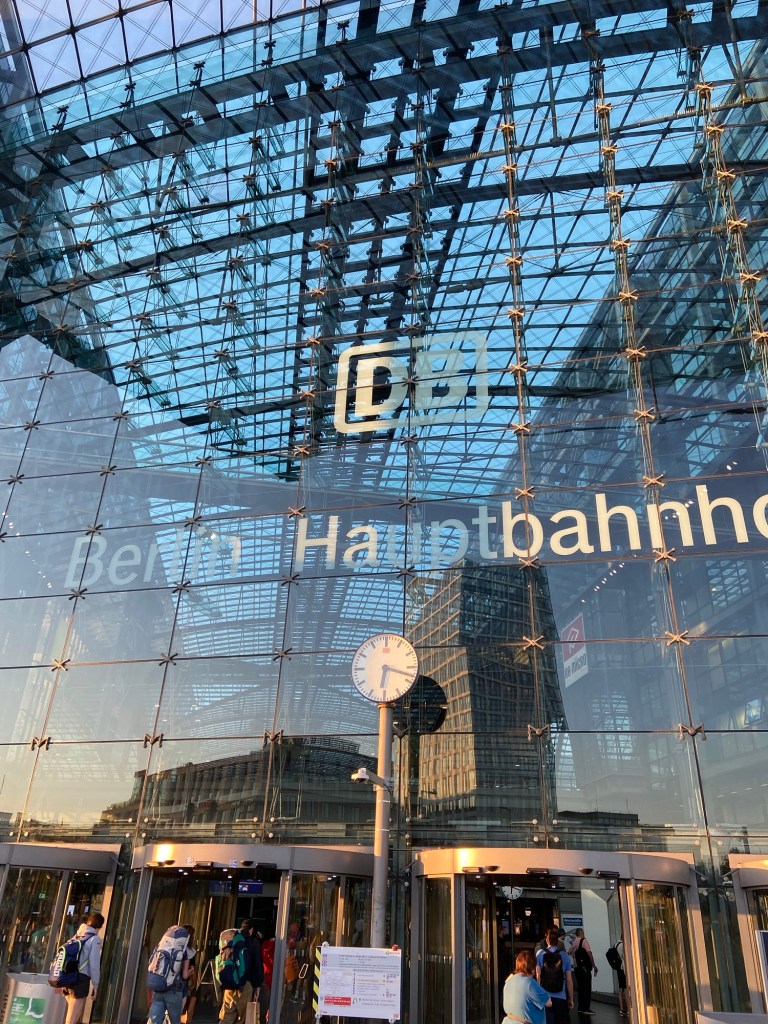
Soon, I am asleep, and dawn brings Berlin.


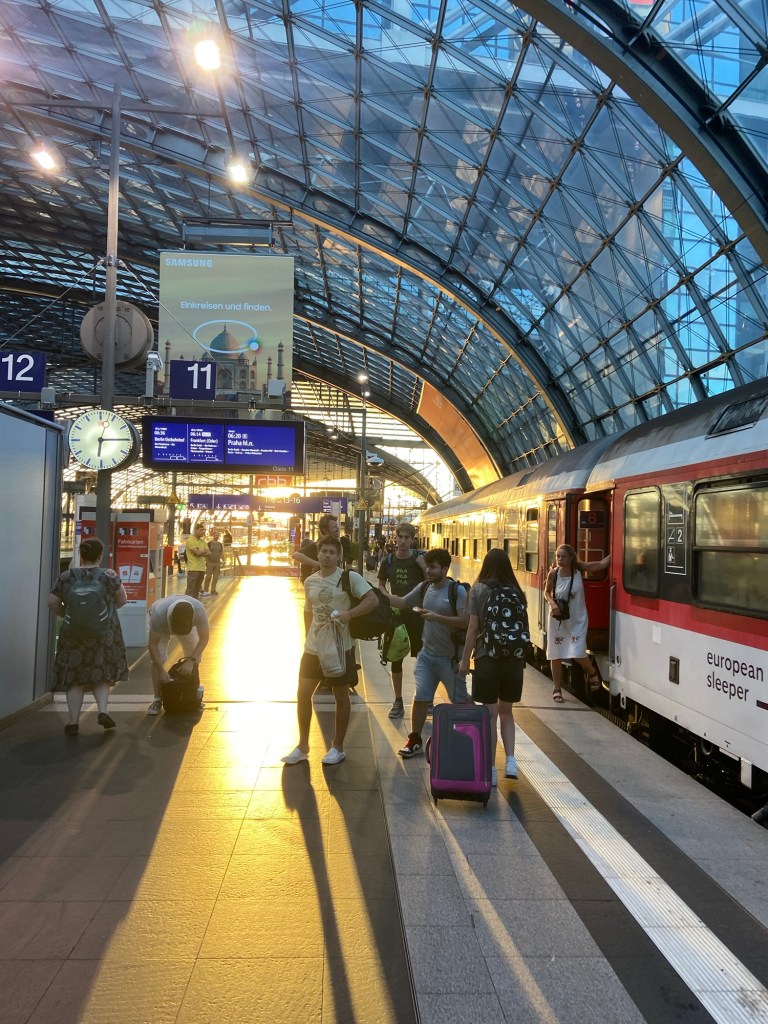
[1] There’s a new “open access” European Sleeper running from Brussels to Prague via Amsterdam and Berlin, you see – so if you don’t mind the airline style Eurostar experience, and there are cheap enough tickets, you can pick up the sleeper from Brussels instead. I fancied the ferry. Oh: or you could fly I guess? 🤪
[2] If you want to see the people who keep the city going, get a night bus. Security guards, cleaners, loading bay managers: ethnically diverse, underpaid, and kept as invisible as possible.
[3] the vast majority using this ferry link are families with cars, us foot passengers are the oddballs.
[4] There’s enough space for everyone, and private day cabins are available if you fancy avoiding even basic interaction.
[5] The EU, to make a massive generalisation, isn’t quite as far down the neoliberalism road as we are, but it’s far enough along for the usual scum to blame it all on migrants, as is reflected increasingly in terrifying election results. The establishment solution? More Neoliberalism.
 jamesofwalsh
Leave a comment