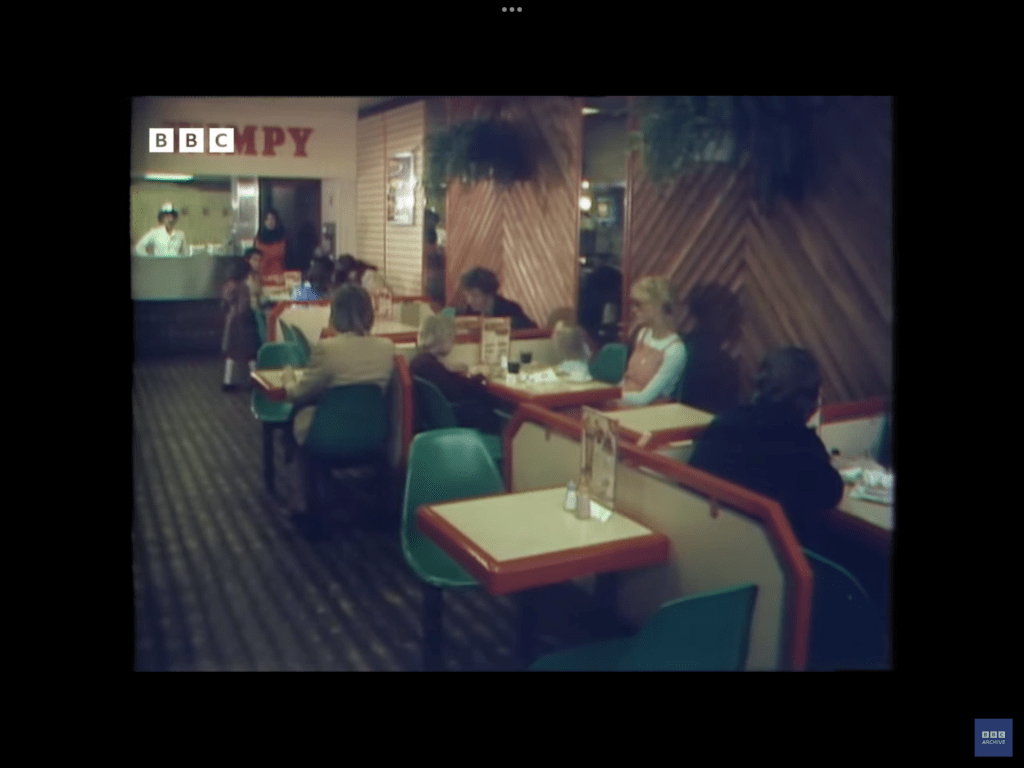
The excellent BBC Archive YouTube account served me some burgers today.
In a special Newsround report from 1981, John Craven visits Wimpy, McDonald’s, and, erm, Trump’s Hamburgers, and wonders whether this “fast food” nonsense will catch on.
“It’s a multi-million pound gamble…”, explains Craven’s co-presenter, stuck sticking cut-out burgers on a map in the studio, like an end-of-days weatherman.
“… to get your and your families into what they call ‘fast-food centres’.
“For this massive investment to pay off, you’ve got to change the way you eat, and will mean less home cooking, and more trips out.”
We know how this story ends, mainly from looking at our waistlines. Still it’s fascinating to see fast food as an American novelty, with the BBC explaining “French Fries” to provincial children via a man with a sensible accent.
Along the way, we meet a Wimpy executive, Peter Swale, speaking from the chain’s Piccadilly Circus branch, freshly converted into a counter-service fast food restaurant.
“If anything the price will go down”, says Swale, optimistically. Stack ‘em high, sell ‘em cheap. The Fordist assembly line burger: in every suburban high street by 1987, and that’s the Wimpy promise.

He predicts a bloody battle for market dominance, to be won by the company with the best products, the best service and – crucially – the best advertising.
And who would that be? His voice suggests Wimpy, but the eyes say McDonalds.
And so it came to pass that the clown made mincemeat of the beefeater.
The last word goes to the kids in Hammersmith McDonalds, corralled by Craven for some target demographic opinions.
“Well, they’re clean, and there’s always people cleaning up tables,” says Peter, a 12 year old with a cracking barnet.
“And the food’s always…”
He corrects himself.
“…Well, usually fresh”.
 jamesofwalsh
Leave a comment