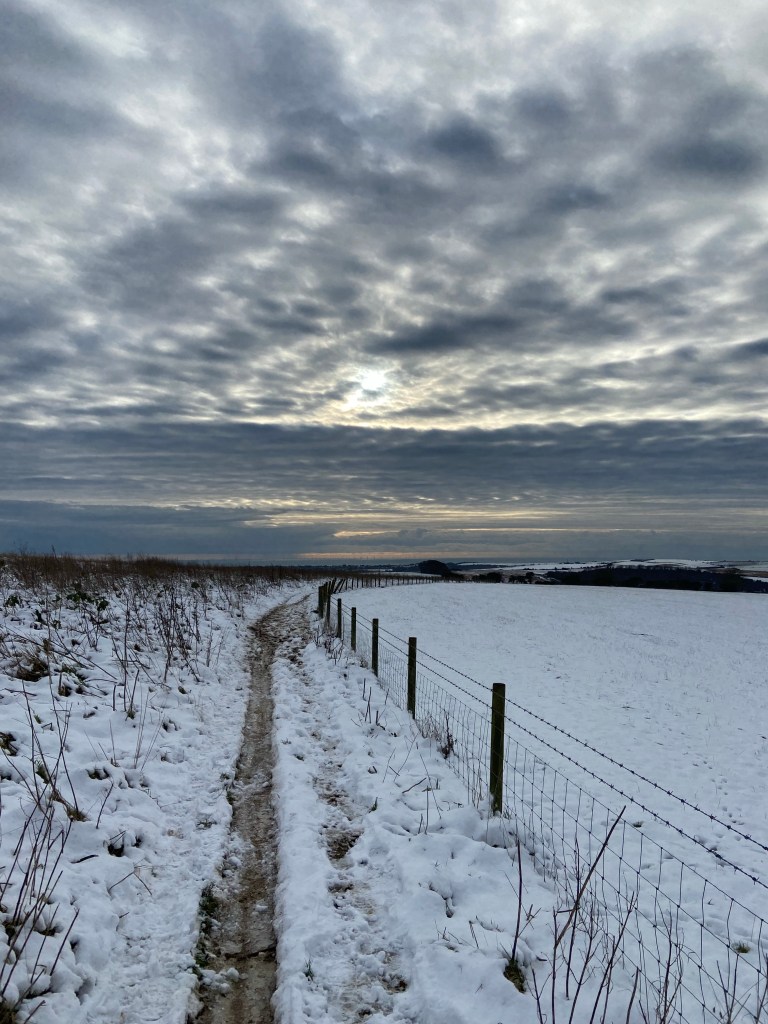
A bright and cold January Friday with no work left to do, and a flat as frigid as a Carry On matron. There was only one thing to do: walk across the ridge of the Downs, and feel the reassuring crunch of snow beneath my feet.

I live just off Ditchling Road, which as the name suggests heads all the way to the village of Ditchling, via Ditchling Beacon – the main route into Brighton for cyclists heading down from London or – less frequently – heading back up.
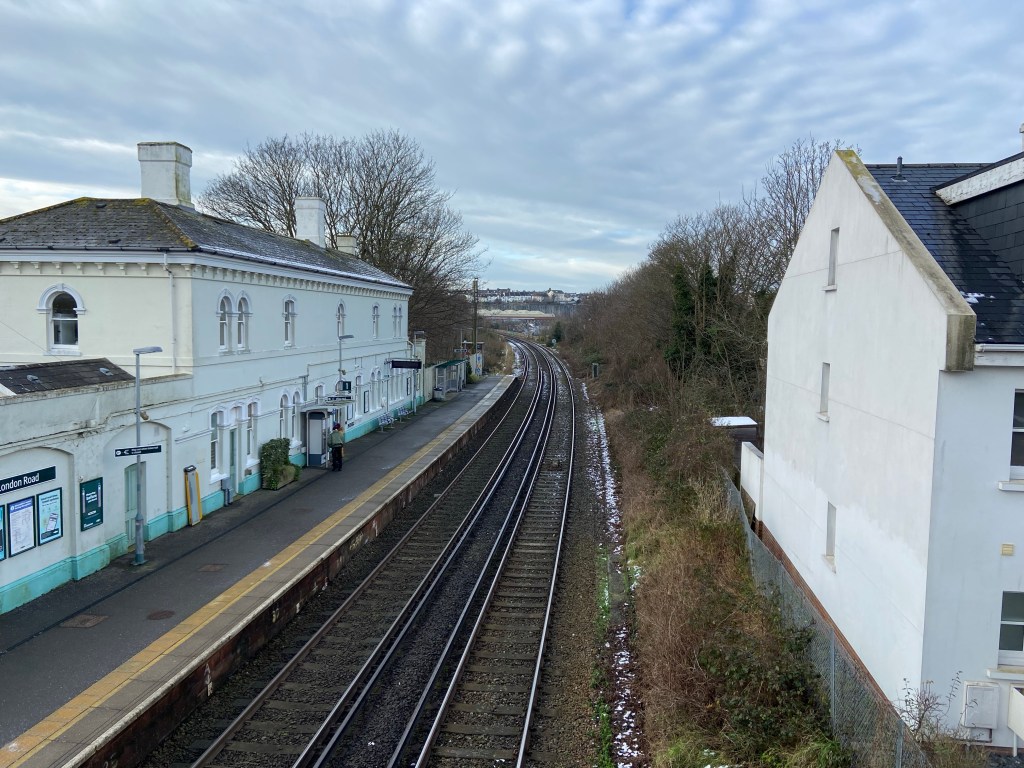
Walking is a different pace and invites different pleasures. I walked through the backstreets of my neighbourhood of Round Hill, which developed with the coming of the railway .
I crossed over London Road station, with its beautiful Tuscan-style station building, and headed uphill past One Church’s Springfield Road premises, with its anarchist book collection, coffee shop, and inevitable food bank.
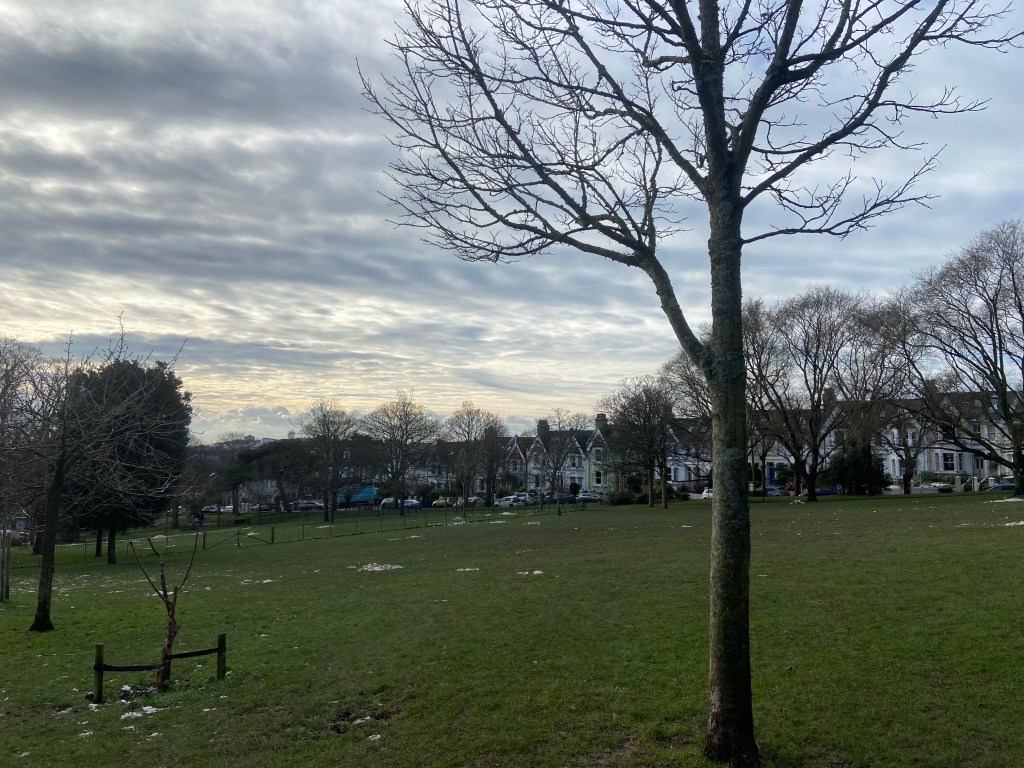
Further up and further in, past Blakers Park and the Babycchino and baby chino shops of Fiveways.

This is an area of wealthy families, and kids with hobbies much, much more sophisticated than sitting in the car outside the pub waiting to be brought a second packet of crisps.

Rejoining Ditchling Road past a lovely looking bakery, I headed uphill and looked for the public footpath sign that would take me away from the stress of the main road.

There it was – joy – and I headed north through the allotments, woods, and dog walkers of Hollingbury Park.

Further up and further in.
On the edge of many English cities and towns, you are likely to come across the following, in no particular order: a retail park, a golf course, a thundering motorway or ring road, and some lay-bys filled with the camper vans and cars of those who can no longer afford the rent.
In the next half hour I pass through or near all of these things. A permissive path through the deserted golf course is festooned with signs warning me to look out for the golf balls that seem unlikely in the snow. Golf courses ruin Britain and should all be nationalised and turned either into public parks, nature reserves, or social housing.


Rejoining the main road, I ticked the retail park, camper vans, and motorway off my list. The latter, the A27, is criminally under-used when I cross. If car-ists can’t use these lanes we pay for, perhaps we should dig them up and turn them into a lovely garden instead.
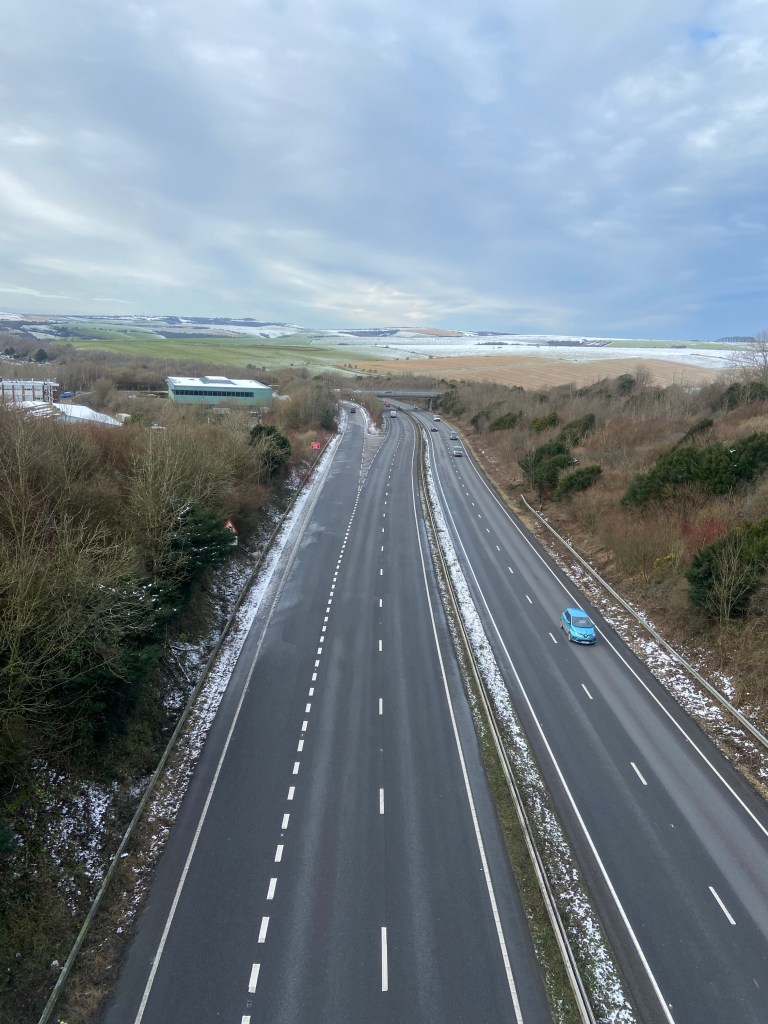
I am by now in the South Downs national park proper, and can march up through frozen mud and snowy fields all the way to Ditchling Beacon if I want to.
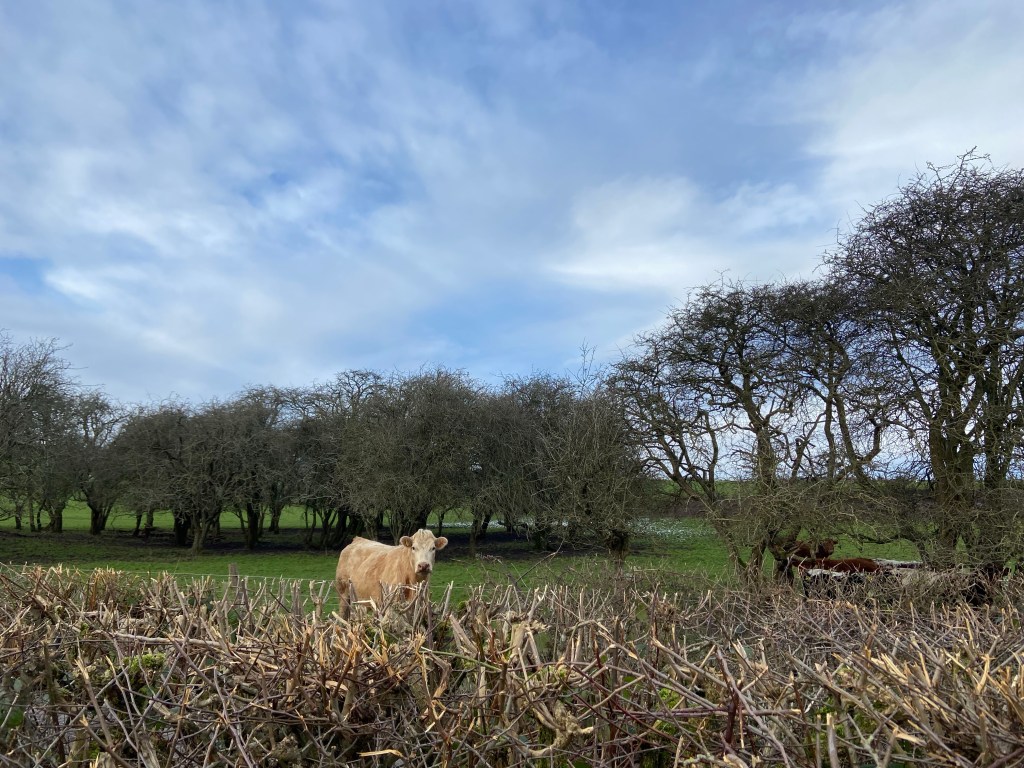
But Hassocks is further west, so I find a footpath on the other side of Ditchling Road that will hopefully take me more in that direction, which takes me past sheep, and then a very scenic cow farm, reminiscent of the kind of farm one can build in the video game Stardew Valley.
This path leads me astray. Rather than taking me north west, up towards the ridge of the downs, it meanders back down back towards the A27, and Patcham and the outskirts of Brighton beyond.
So I go off-piste, past a frozen mill pond and through a couple of fields, before I finally get back on track somewhere near the Chattri memorial.
From here, it’s up, up, up, through the snow, ice, and muddy furrows formed by the heavy wheels of farmer’s 4x4s, filled with muddy ice which cracks satisfyingly underfoot.
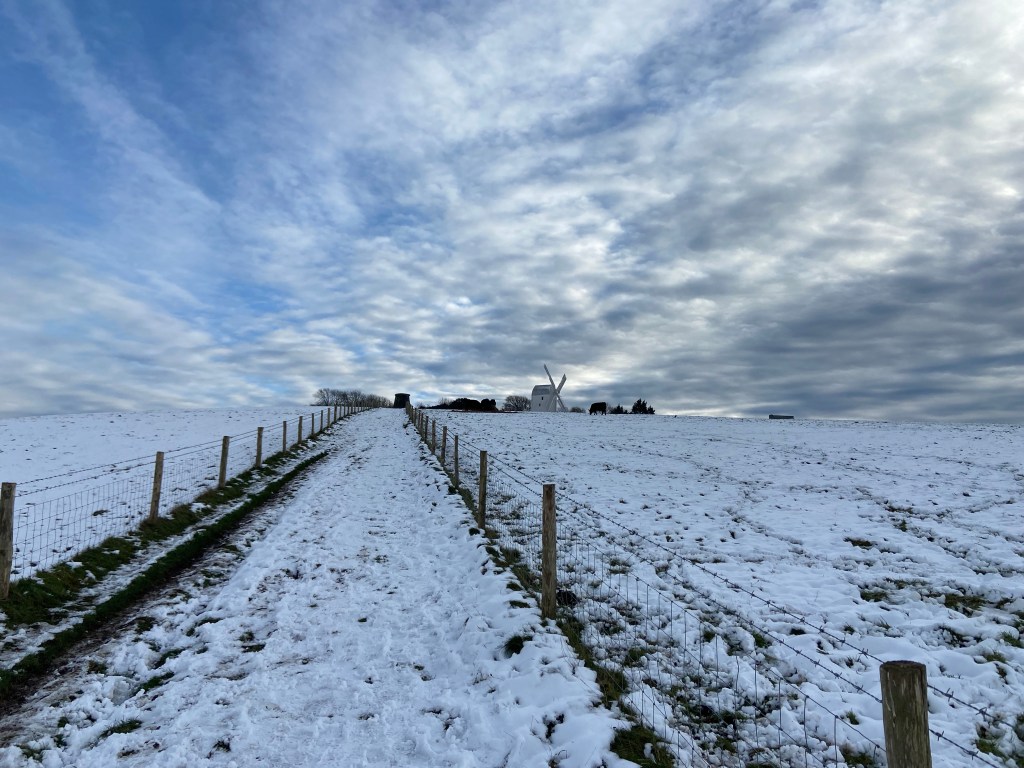
I hit the ridge and the South Downs Way, pass the Jack and Jill windmills, then head down the other side to Hassocks.
The train, insultingly, only takes twelve minutes to take me all the way back to Brighton.






 jamesofwalsh
Leave a comment