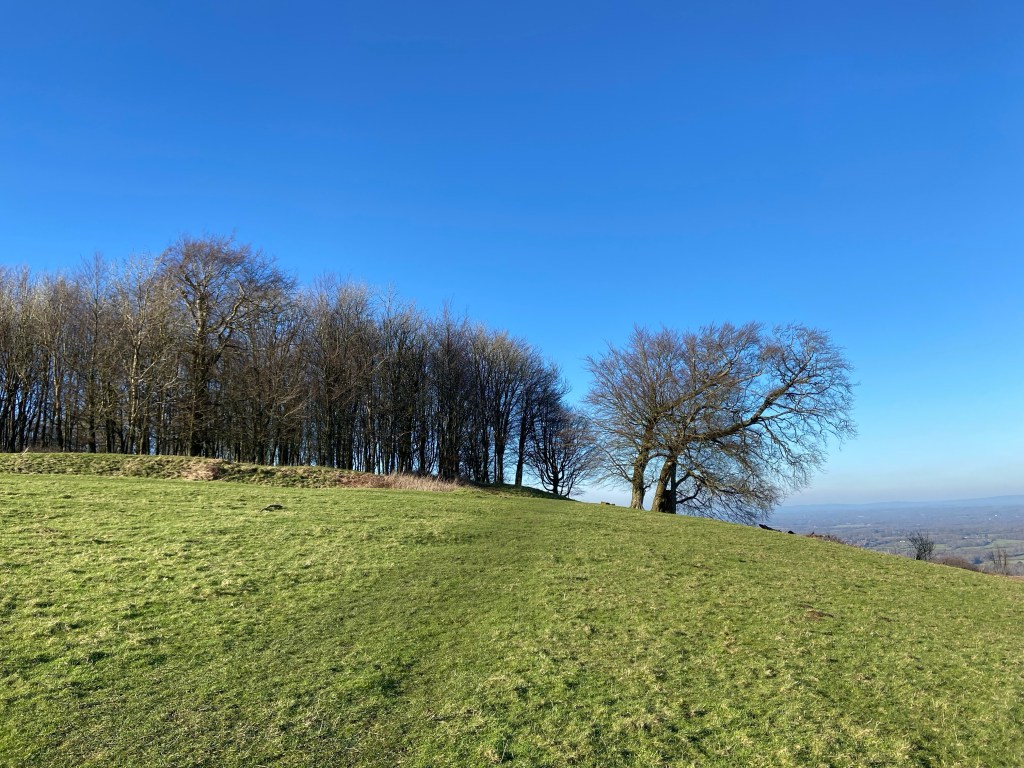
“Chanctonbury is a place where time slows” [1]
The last time I made it up to Chanctonbury, the world was different. It was 2019, and I was walking the South Downs Way.
I was lost, but not in a geographic sense, as it’s hard to lose one’s bearings when walking a giant ridge of chalk with the sea to one side.
But having recently had jacked in a career, I was lost mentally, emotionally, and metaphorically.
The walk along the chalk was for something to do, and to have time to think.
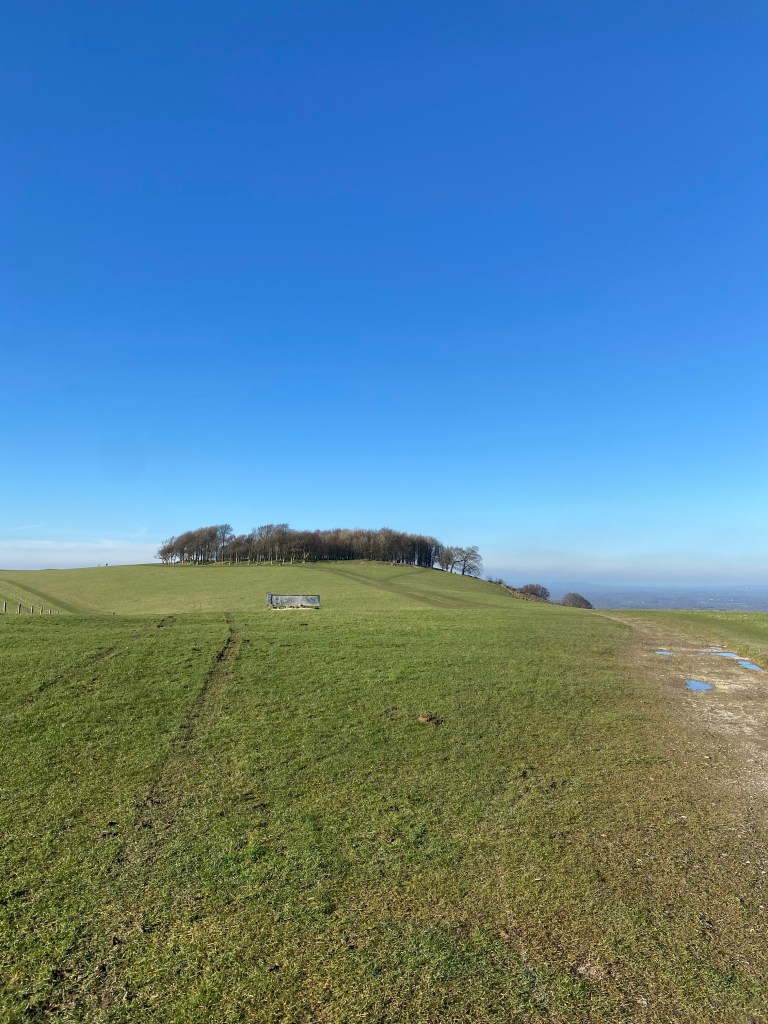
I didn’t know anything about Chanctonbury Ring before approaching it, but it’s a spectacular and eerie place to arrive under darkening skies after a long day of walking alone.
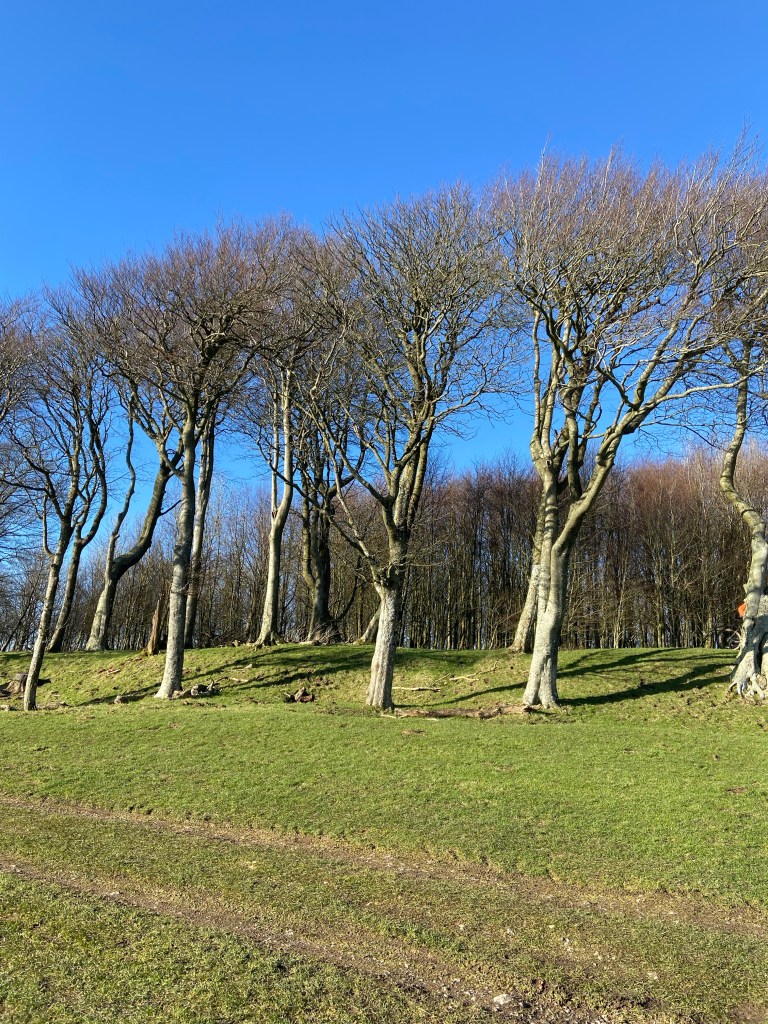
The beech trees, planted by a Romantic 18th century landowner, have done little to beautify this place of old rituals and bleak living.
Psychogeographer Rachel Poulter writes [2]:
“Over thousands of years it has been a site for defence, ritual, worship, and sanctuary. An ancient bank and ditch still encircle the hill fort; within and around lie remains of Bronze Age barrows, Iron Age earthworks, Saxon saucer barrows and, just beneath the surface of the ground, the remnants of two Roman temples believed to have been used by a boar cult for religious ceremony.
“The chalk, clay and flint hold the beech trees steady which hide the history of this hidden landscape layered up over time.”
I don’t believe in ghosts, and find the occult as silly as a 1970s Doctor Who serial about… well, the occult.
There is, though, something about the place.
True magic, for me, is in the stories we tell about ourselves, the people that came before us and, we can only hope, those who will come after.
I’m as much of a sucker for psychogeography and hauntology as the next Situationist, and there is something ineffably Bill Drummond-esque about any attempt to divine and reclaim the land, this land that is our land, and your land too.
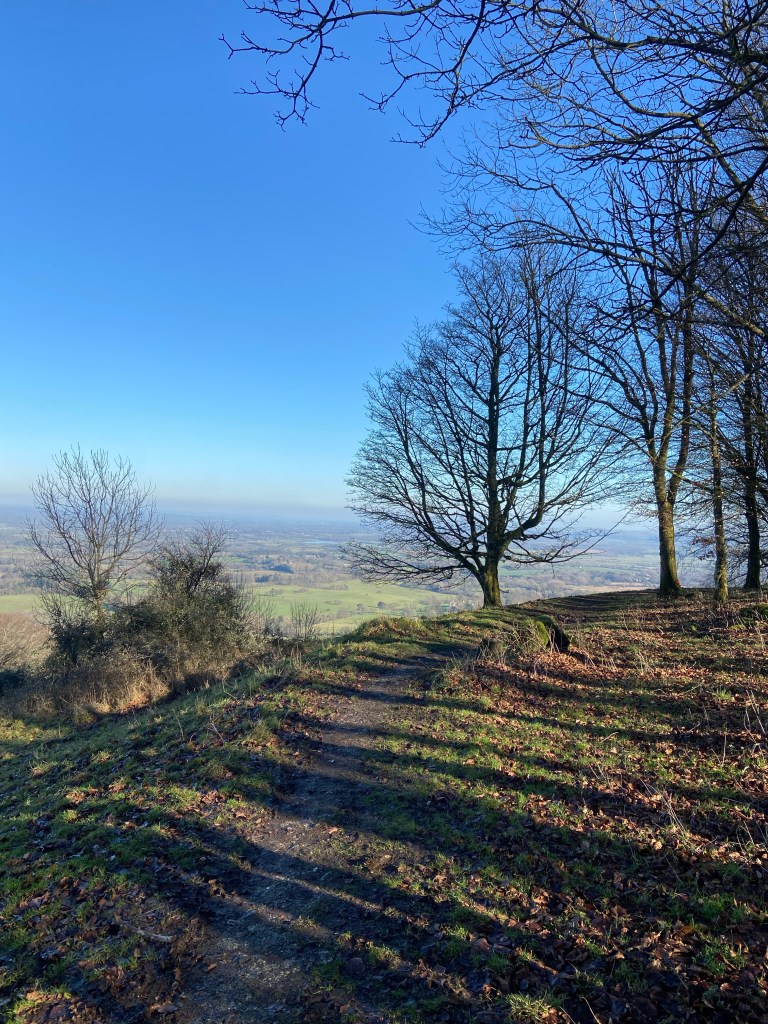
These paths have been walked before.
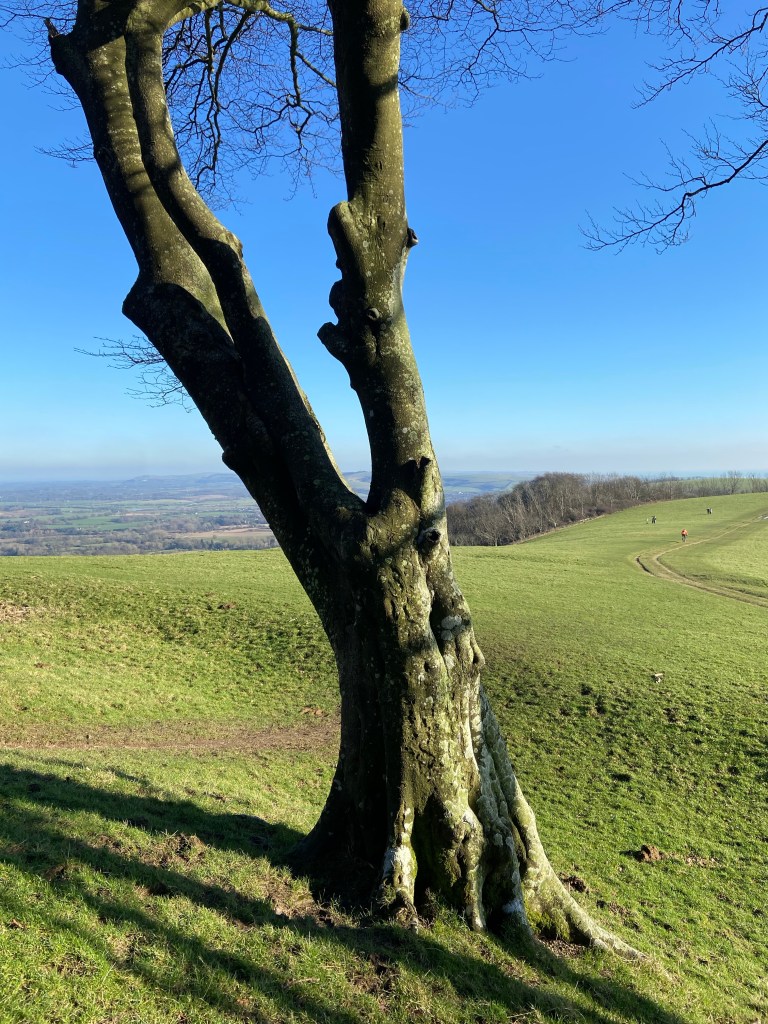
Almost six years on from my previous, partially remembered visit, I head up once again, and this time, I wasn’t alone.
[1] Rachel Poulter, Unseen Four.
[2] Ibid.
 jamesofwalsh
Leave a comment