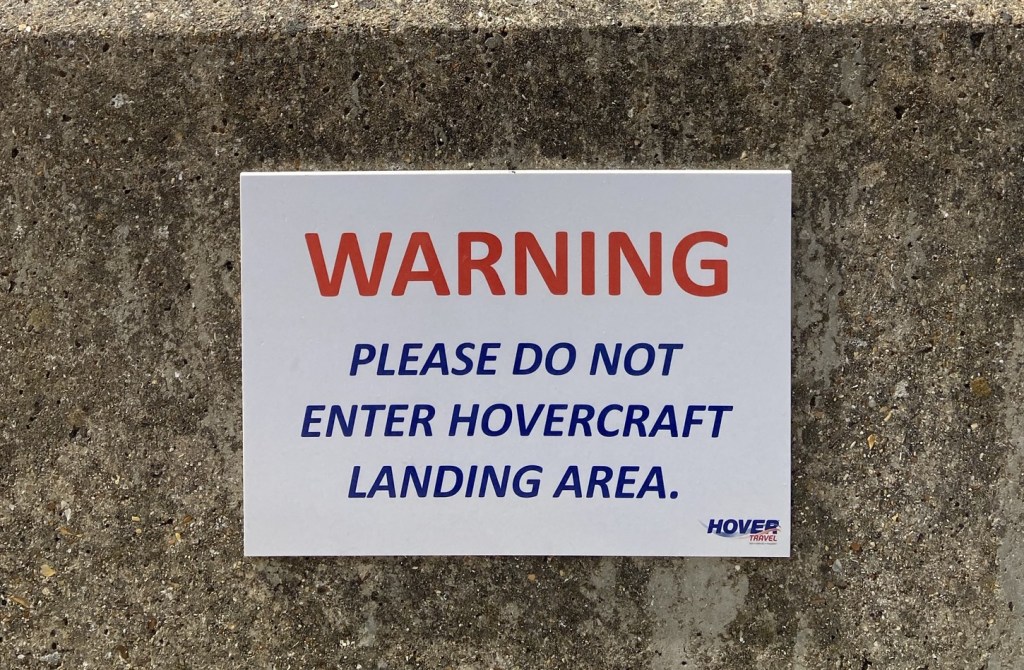
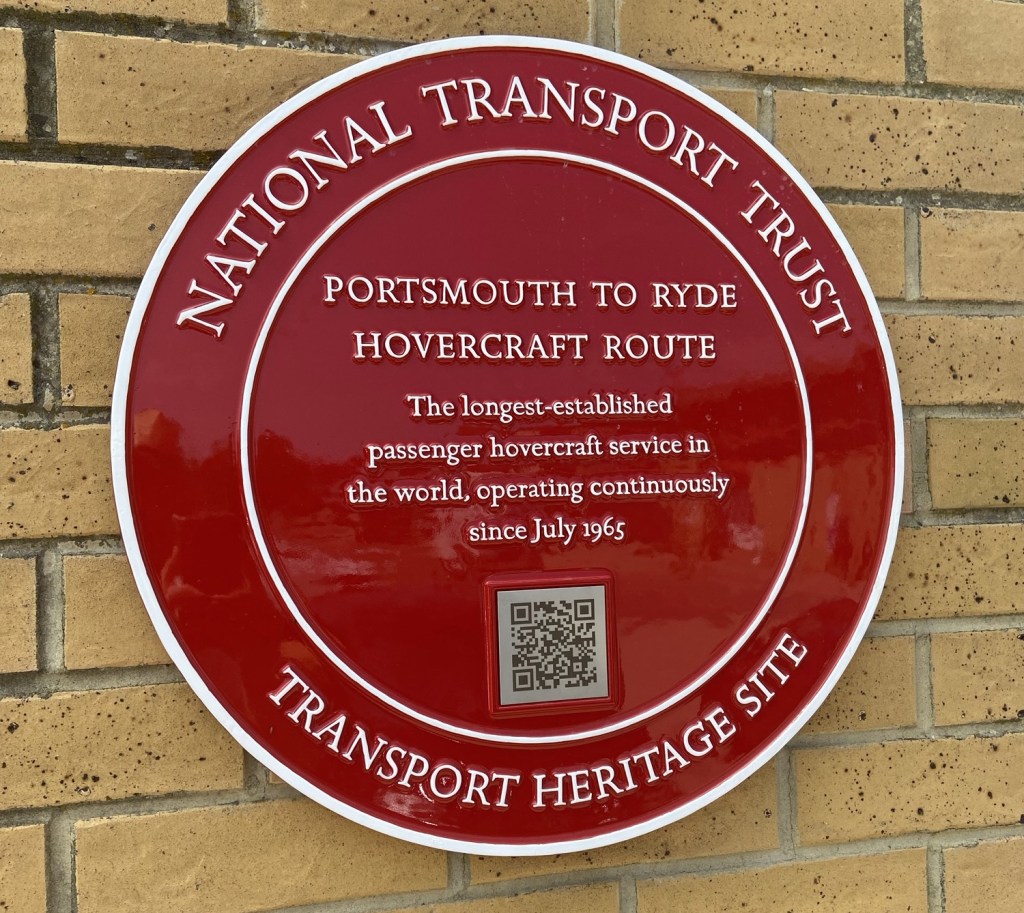
The Hovercraft from Southsea in Hampshire to Ryde on the Isle of Wight is the last commercial passenger hovercraft service in England, and one of two left in Europe. [1]
Hovercrafts were the future, once. A British invention, from the endearingly stereotypical crackpot eccentric Christopher Cockrell, these were the postwar zeppelins: a mode of transport for the modern age, but one that never quite took off beyond its home nation. [2]
By the 1990s, the cross-channel hovercrafts – huge, vomit-inducing beasts – were coming to the end of their collective era. Ramsgate Hoverport is now a memory, nothing left but half-hidden concrete ramps in a nature reserve.
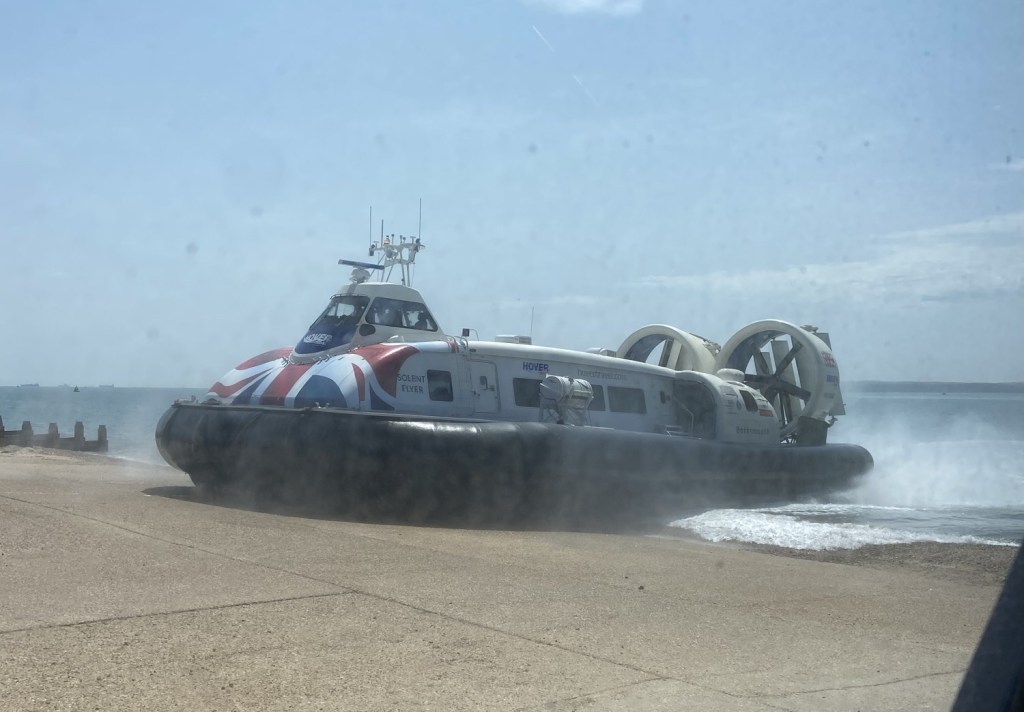
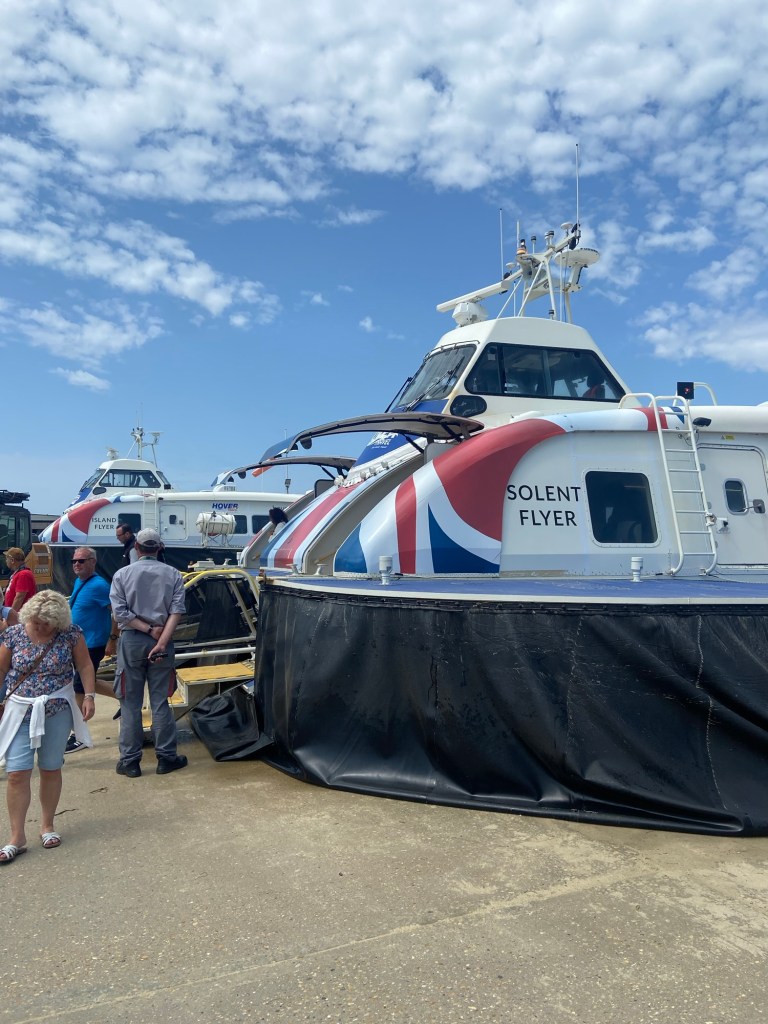
Hover Travel, the company that runs the surviving Ryde to Southsea service, leans heavily into the patriotic branding. The Solent Flyer, our craft arriving into Southsea Hoverport, is swathed in union jacks and pro-military charity logos.
In this, it reminds me of the Wimpy next door at Southsea Pier – there’s something inherently nostalgic, and a touch fascistic, about it all. “Created, built and operated in GREAT BRITAIN”, ukips the souvenir mug in the gift shop, itself festooned with yet more national flags. [3]

More endearingly, HoverTravel really lean in to the whole “hover” thing. As mentioned, the small, squat brick building in which we wait for our ride is a “Hoverport”. [4] The connecting bus from Portsmouth & Southsea station is the “Hoverbus”.
My mum’s local resident discount card is the “Hover Blue” (why not HoverPass?). The crisps and chocolate vending machine in the waiting room is where you get “Hover Snacks”. The dog bowl outside is for “Hover Paws”.
After a quick visit to the Hover Toilet, we joined the Hover Queue for the short walk across the concrete to the Hovercraft. A 78 seat vehicle, with room for bikes and mobility scooters, we headed up the ramp for our 10 minute ride across the Solent. These mofos can certainly move, flying on a pocket of air above the sea at 40-odd mph.

Another reason they never quite caught on, I think, is the sheer noise. As we walked the island coast down towards Seaview, we could hear the Solent Flyer thundering its way back and forth from and to the mainland, between slower, rival ferries, cargo ships lumbering their way to Southampton, and pleasure boats of all descriptions.
Greeting us at our destination in Ryde are three other Hovercrafts. One is our sister ship, the Island Flyer; the other two are military landing craft, pointing to the current and, perhaps, future main use of the technology.
HoverTravel’s sister company, Griffon Marine (formerly Griffon Hoverworks), operates out of Portchester, just up from Portsmouth Harbour, and has been supplying craft for military, police, and coastguard use to everyone from Lithuania to South Korea. In part, this is why I suspect the cross-Solent service won’t disappear any time soon: it’s a useful marketing tool for the company flogging its unusual wares to increasingly border-obsessed nation states across the world.

In an era of rising sea levels, you can see their use also for humanitarian rescue and, hopefully, further public transport use as we adapt to our increasingly uncertain and watery margins.
So let’s end with a bit of optimism. Hovercrafts aren’t as loud or as energy-intensive as they once were, and fully electric (rather than diesel) vehicles seem likely in the near future. Just as airships are very much sensible options for future freight and perhaps even passenger service, the hovercraft might just ride again.
See you at Brighton hoverport in 2037. I’ll meet you by the monorail station interchange.
[1] The other? A winter-only service across a lake in Estonia. There is also a service at an airport Japan that’s scheduled to start this year.
A hovercraft features in the very silly ending to the Jackie Chan film Rumble In The Bronx (not filmed in the Bronx – Vancouver, I reckon).
[2] They also never became so associated with catastrophe in the public imagination, though there was a particularly bad accident on this very route fifty years ago.
[3] All very grim, but you understand the economic logic. We’re deep in Brexit territory here, and the island population who keep this service going are white boomers and pensioners, many of whom spend increasing amounts of their time on “remember when binmen were ‘ard?” Facebook groups.
[4] As mentioned above, there used to be truly impressive Hoverports. There’s the Ramsgate one I mentioned earlier and a similarly modernist pile in Boulogne. Both gone, both faintly reminiscent of Gerry Anderson’s imaginary futures.
 jamesofwalsh

Leave a comment