
On a windy, sunny Sunday afternoon, I got my butt out of my usual, sometimes self-defeating patterns of weekend behaviour and took myself up into the Downs.
I’m very lucky to have the South Downs National Park on my doorstep, and I have been rationing bits of it out to myself slowly. My brain forever craves novelty, and so the mere fact that there are places nearby that I’ve never been to before helps keep me sane.
The idea was to walk back to Brighton, timing my arrival so that the vast majority of the London-Brighton cyclists – for this was the day of the British Heart Foundation ride – had packed up their panniers and headed home. Do London-Brighton cyclists have panniers? I suppose not. I suppose it’s more liquid gel packs secreted about their lycra.
I digress.
I took the train to Lewes, a short trip along the line towards Newhaven and the beguilling possibility of France.
Lewes station is a pretty one, with an excellent old-school snack bar and cafe next to platform two. [1] Tell them I sent you.

Coming out of the station and turning left, I was soon in the grounds of Lewes Priory, filled with dog walkers, and happy families, and medieval reenactors. “Make peace, not war”, shouted some uniformed schoolkids as they walked past the faux-Norman battlers. “I agree”, I shouted back, because why not eh.
Passing through the ruins, the priory being expertly smashed up by Henry VIII’s Italian goons during the disillution of the monastries, I then passed under the thundering A27 and took a series of nice country footpaths to Kingston Near Lewes, not to be confused with Kingston-Upon-Thames, Kingston-Upon-Hull, or Kingston, Jamaica.
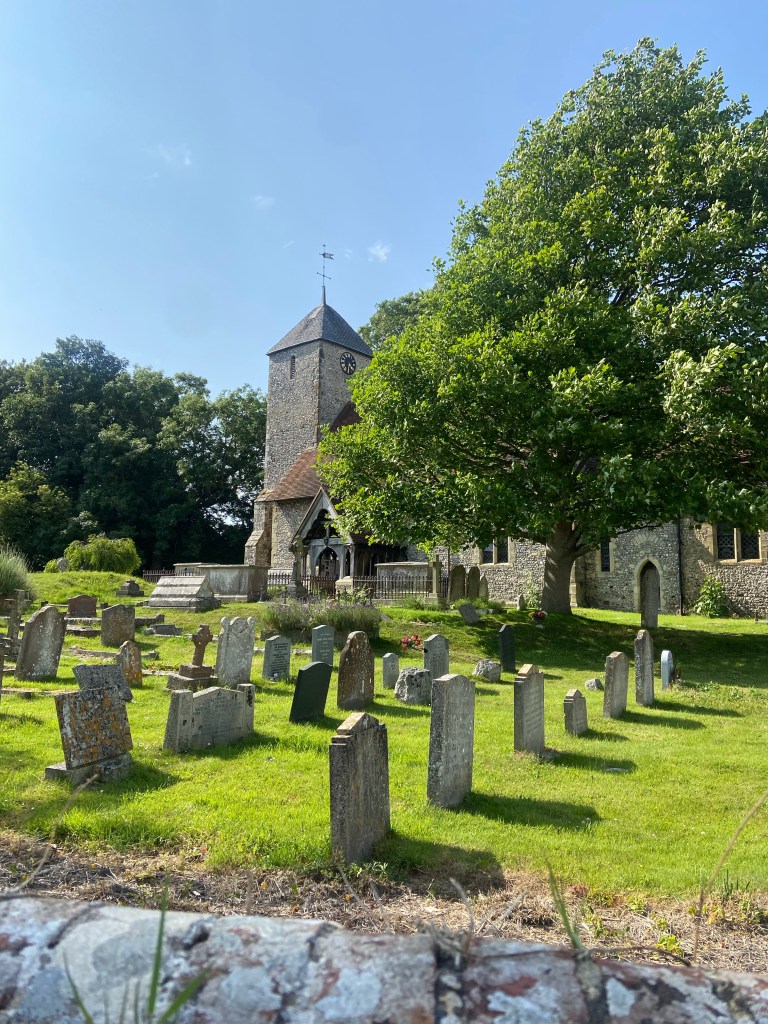
Kingston is a nice village with a good old church, a pub called The Juggs where my folk choir once performed, and the ridge of the South Downs looming above it.
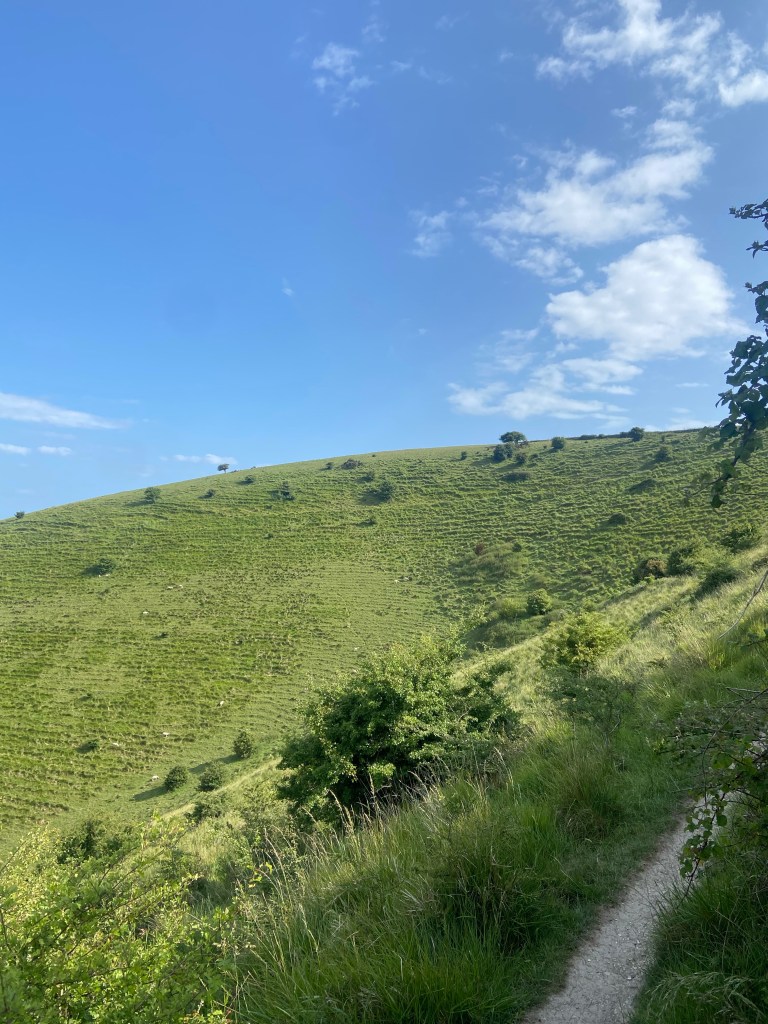
Up and over the ridge I went, with beautiful views back towards Kingston, Lewes, and beyond. The noise of the A27 follows you for a while, but is lost somewhere near Kingston, which was a relief, both to me and, I’m sure, for the local residents.
The South Downs are basically one big ol’ lump of chalk. They are, in fact, literally ancient crap: a chemical precipitate created by tiny calcareous algae. According to Peter Brandon: [2]
Scientists now consider the algae as too small to fall and reckon that they first passed unchanged through the digestive system of microscopic shrimp-like creatures called copepods before becoming solid lumps of excrement which were heavy enough to settle on the seabed. This process operated over the course of more than twenty million years.
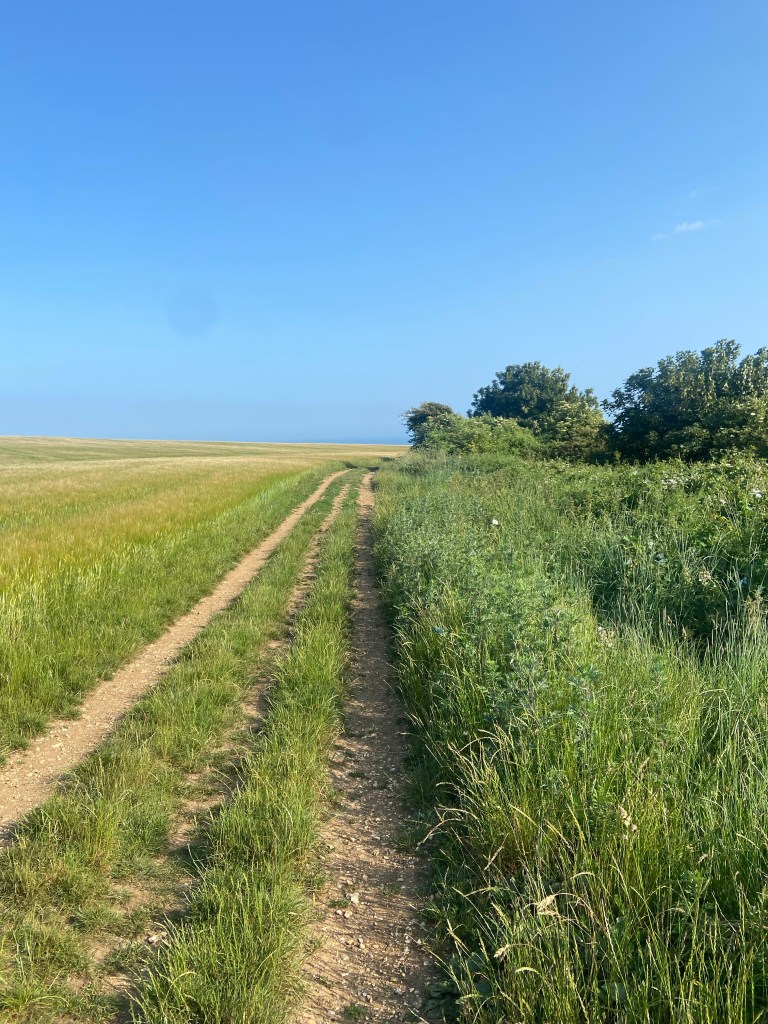
Once up on my pile of pre-historical shrimp excrement, I barely saw another soul, save a couple of joggers and a lone bird watcher. It wasn’t always this deserted: the Downs were one of the cradles of civilisation in Britain, early farmers drawn to the light soils of the chalk. It’s very strange walking for hours, enjoying the solitude while imagining the bustling, interlinked, complex economy of farms, metalworkers, villages, traders and, who knows, clowns that populated these hills over two thousand years ago.
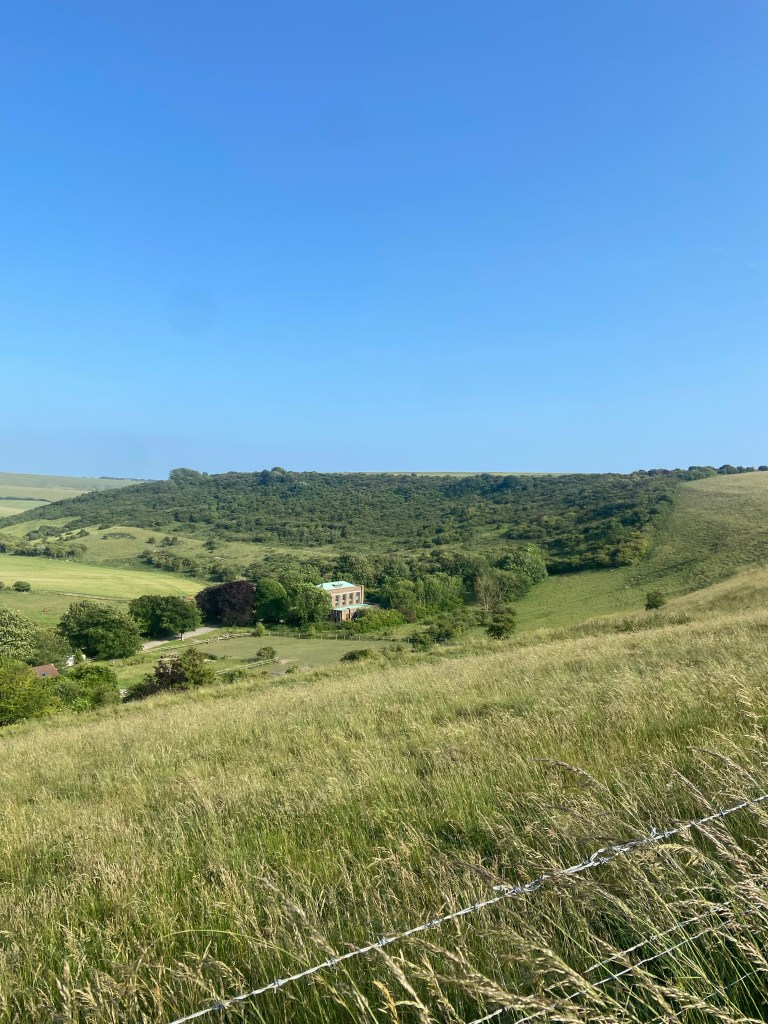
Heading down through Balsdean Valley, a now abandoned hamlet that was one popular with our old friends The Romans, I met a few friendly sheep and a herd of cows with young calves who, after thoroughly sizing me up, decided against trampling me to death.
The approach to Rottingdean is beautiful, its windmill standing proud to the west amid the late afternoon sun (other times of day are available). You can get pretty much all the way into the village without hitting a road. I passed the local primary school, with its large posters warning both children and parents about the dangers of various social media sites, and then finally emerged onto Rottingdean High Street.
After all that space, light, and solitute, it was discombobulating in extremis to face this too-busy road, heading down to the nasty junction by the White Horses pub. I was happy to see the back streets of this village I’ve always, until now, associated with trying to get out of as quickly as possible, such is the absolute domination of the ever-enbiggening motor vehicle.
I could, from here, have walked back to Brighton via the Undercliff Walk, but I wanted to get to my gym and swimming pool before it closed. So I gawped at the sea, and took the bus all the way home.









[1] The Runaway Cafe. According to their website: “The bacon sandwiches are legendary, once being ordered specially by the late Diana Spencer, Princess of Wales”.
[2] From his brilliant book, The South Downs, a fascinating biography of the place from pre-history to the present day.
 jamesofwalsh
Leave a comment