
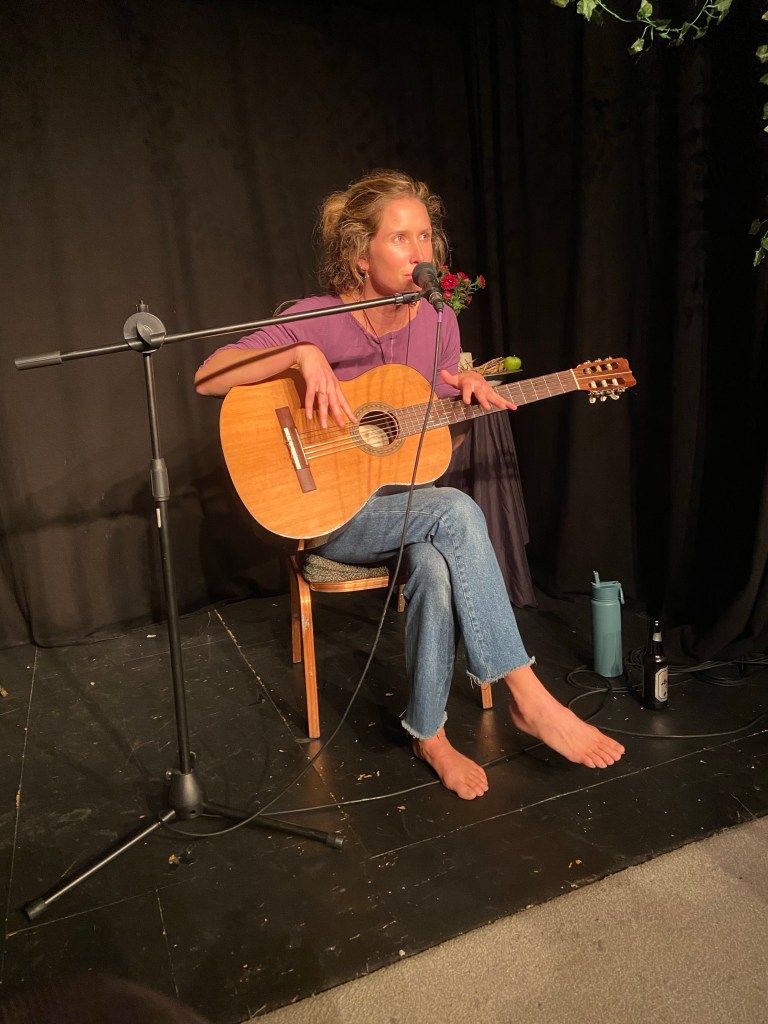
I’m not sure I ever wrote up my performance of Future Folklore: Songs and Tales From Beyond The End Of The World, which I debuted at Once&Future Festival at The Yellow Book back in April.
I ended up developing a bit of a mental block about it, I think. The show didn’t go badly, but it didn’t go exactly how I wanted it to. I was very frustrated at myself for writing it so last minute, even though the basic outline for the show had been rattling around my head for many weeks. I was also a bit irritated at myself for not having memorised it, as reading off an iPad doesn’t make for particularly riveting storytelling.

The slides were good, though, as was the general idea. And I managed to write a new song specifically for the show, which has become one of my favourites: Dunwich Dynamo, which The Highchurches performed for the first time at Brighton Folk Choir’s end-of-term cabaret back in early July.
Basically, the show developed out of a single paragraph pitch, typed into a google form and thought up on the spot, as part of the application process for Once&Future Fest. Lots of songs I’ve written over the past couple of years feel like they belong to some post-apocalyptic England, though they weren’t written as such. And Martha’s songs, especially Hymn For The Ruins, are explicitly post-apocalyptic in nature.
So what dimly existed in my mind was the idea of an hour long multimedia show, part storytelling and part song, travelling around this far-future England. Visiting assorted city-states and surviving human enclaves amid the flooded lowlands and dim, contorted memories of what came before.
As I say in the show, I grew up as a Cold War kid, and the concept of nuclear armageddon was ever-present, both in the news and in wider culture and art. Russell Hoban’s Riddley Walker was a particular influence, but there is so much. The seventies and the early eighties, particularly, is a golden age of both dystopian and utopian post-annihilation imagination. Even Star Trek is set, with the most extreme of optimism, after World War III.
Gradually, a song list began to form, as a backbone to the show. Some songs are covers – Chris T-T’s M1 song acts as a jumping off point, and Monkey Swallows The Universe’ Sheffield Shanty introduces us to the thriving, if soggy, 31st century People’s Republic of Yorkshire – but the majority of the songs are by The Highchurches. Dunwich Dynamo, which started out as an a cappella chant, was the only song written specifically for the show (the day before!), and Doggerland was the only song that I wrote with a specifically future-dystopian intention, the song emerging from visions of rusting wind turbines, shifting sandbanks, and future nomads worshiping things they no longer have the context to fully understand.
The period we’re living through now is much scarier than the Cold War. Nuclear armageddon is one thing, but it was always possible to imagine a time beyond. Now, with climate collapse, ecological breakdown, and the continued existence of Piers Morgan, it’s harder to imagine a time beyond. As Mark Fisher said, it’s now easier to imagine the end of the world than the end of capitalism.
I hit a proper depressive low after debuting the show back in April. I was frustrated at myself for not working harder on it, for not preparing it better. I find it so hard to make myself do things I need to do, but I know when I’m struggling when I can’t even find the focus or the energy to do the things I actually *want* to do.
And, like, the show wasn’t crap. It was definitely good, perhaps very good. No-one who attended had anything but nice things to say about it afterwards. Martha was eulogising the idea, and had dreams of concept albums and future tours, if not tie-in t-shirts and novelty pencil cases. No-one threw any rotten vegetables, or took umbrage at my harsh depictions of Kent.
But the show could and should have been better, and I fell into a trough of despond and self doubt. In short, the imposter syndrome was raging. Up on stage, sweating under the lights, with my silly slides: why was anyone else taking this seriously, when I wasn’t sure if I was taking it seriously myself?
Fast forward five months, and I feel a lot better about things. Invited to perform at Hattie Snooks’ The Court, I decided to resurrect the show, or at least, a portion of the show, as it was a 20 minute slot. I decided to be a lot looser about the whole thing, not to rely on any notes, and to think about it much more as a work in progress than a completed, perfect thing.

And the gig went beautifully. After a confusing opening, involving a disappearing picture of a sexy ghost, the show made a great deal more sense. We kept ruthlessly to time, and I only really allowed myself one, five minute long spiel between songs to explain the context of the show, and to once again have a go at Kent.
The songs – Hymn For The Ruins, Even Keel, Doggerland, and Harvest Moon – provided the framework, and the imaginary future geographical context. We performed acoustically, with a knackered Martha having to rely on her chair for some what-looked-like-rocking-out guitar support after her strap snapped.
I received some enthusiastic and very useful feedback from audience members and the other acts, and plenty of compliments – some for the songs, and some for my T-shirt.
I went home feeling much, much better about the project, and am now able to reflect that I’m in a much better place more generally. I’m so much more comfortable on stage with my songs, and with Martha I am one-half of a double act that’s funnier than most professional comedians.
I’m excited to see where the project takes us.

Big up also to the other people on the bill: Hattie, of course; fellow folk choir legend Saoirse Juno, and Paul Levy, a fascinating man who may or may not be a supernatural investigator alongside being an academic writing and warning of the various dangers of AI.
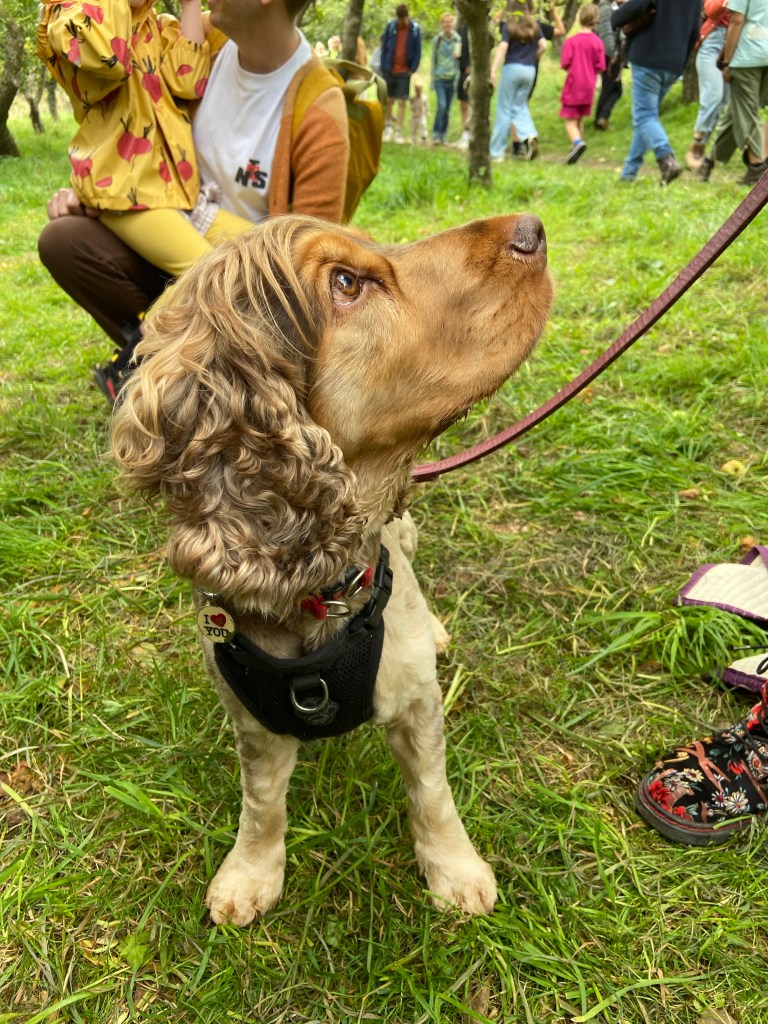
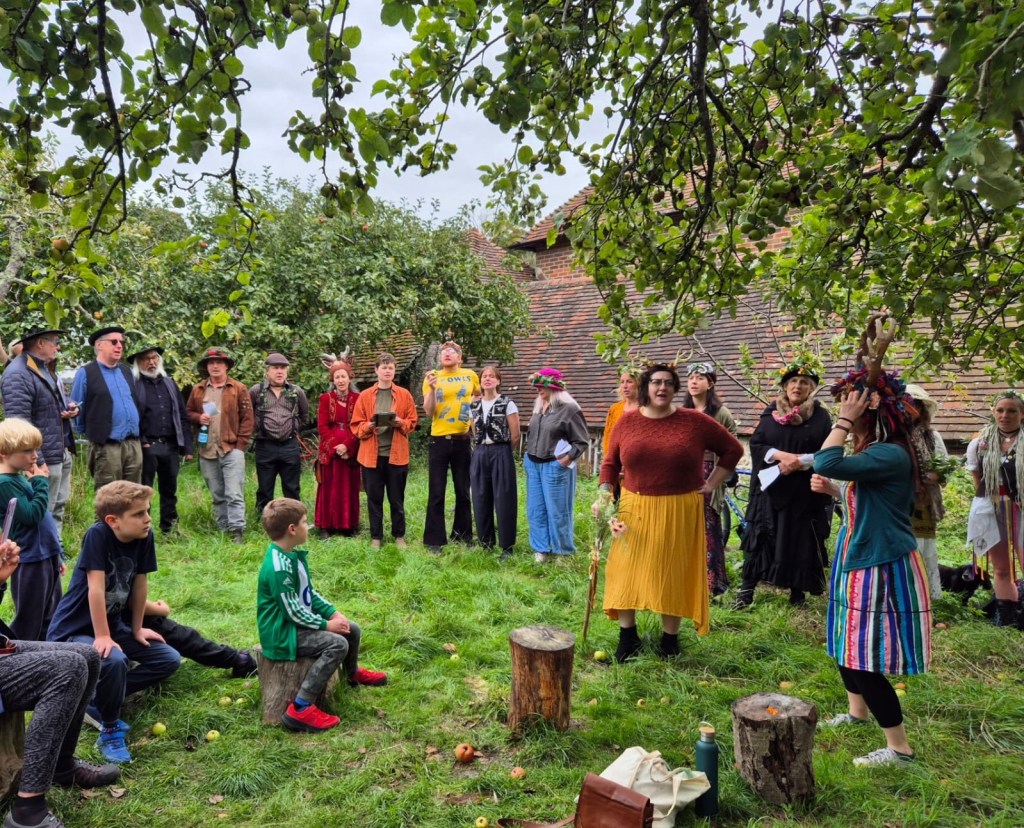
Heading back a few hours, and Sunday afternoon was dominated by Apple Harvest Day at Stanmer Park. It was a lovely, sunny day, with plenty of people turning up to watch Brighton Folk Choir’s afternoon gig in the orchard.
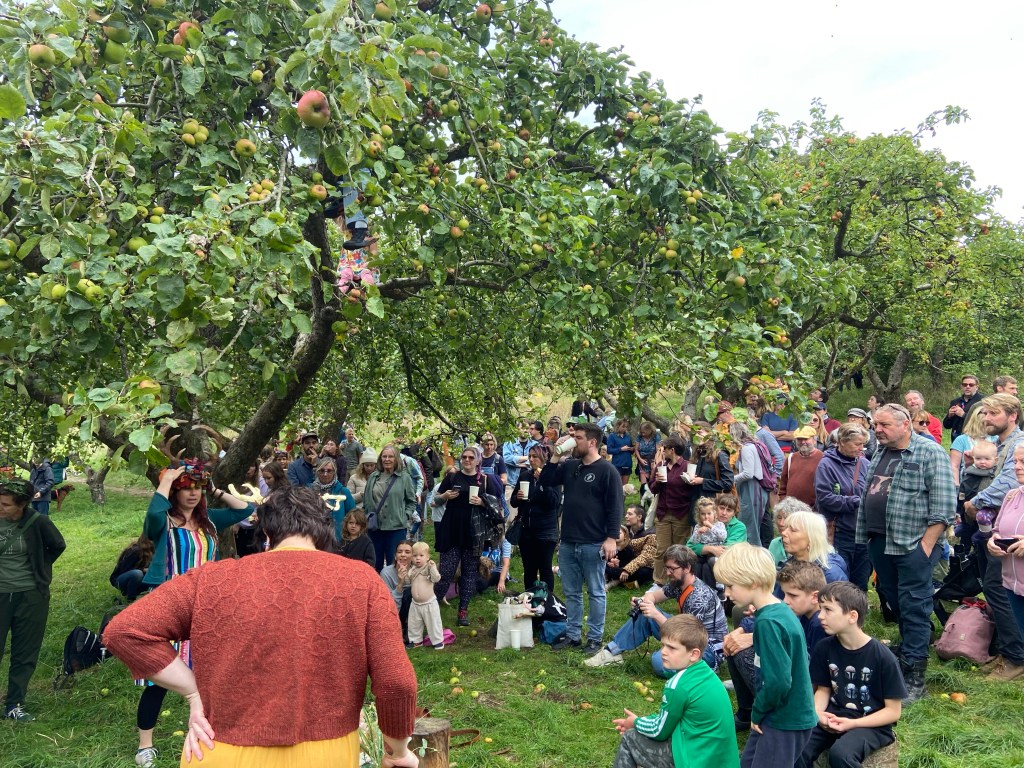
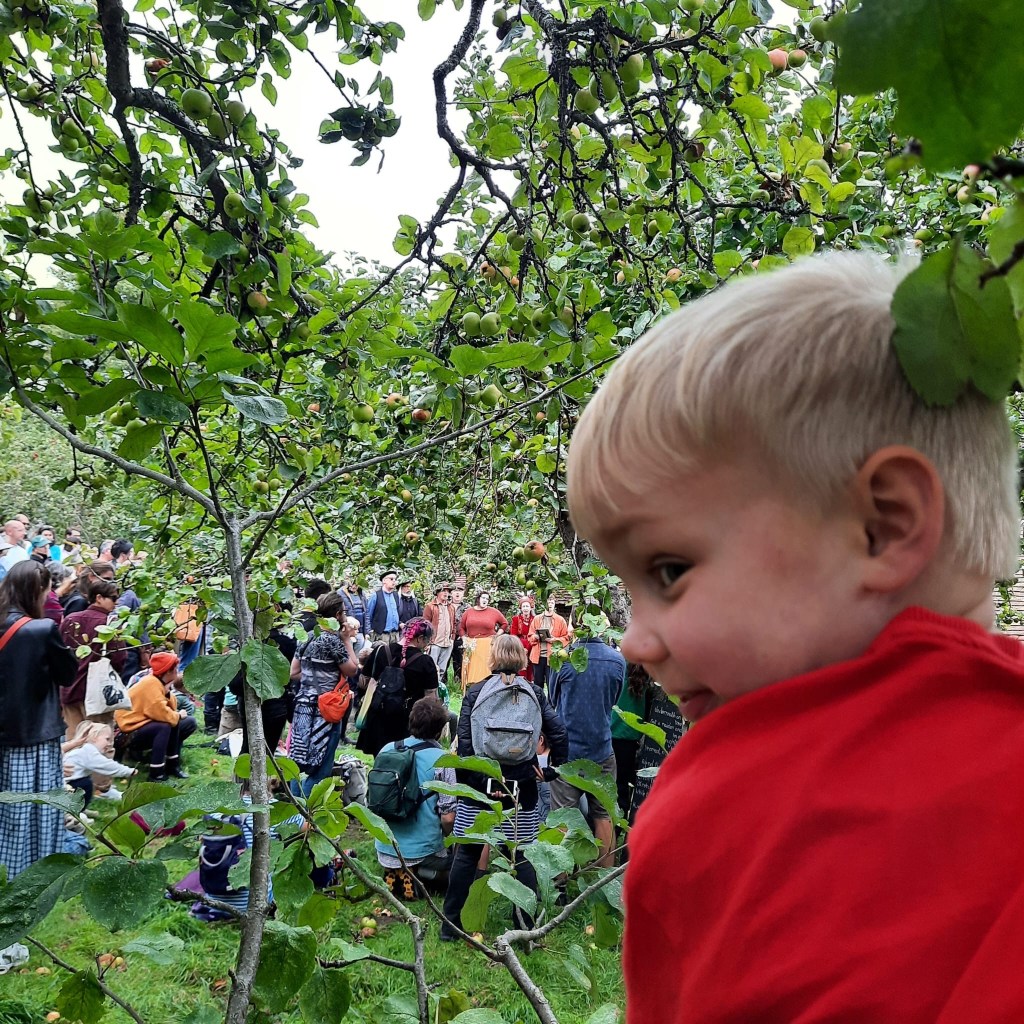
Special mention to the child who nearly fell out of a tree onto Jo Burke, our choir leader, during the first song. Squashed by plunging scrumper is frankly a perfect folk singer cause of death, but Jo survives to sing another day.
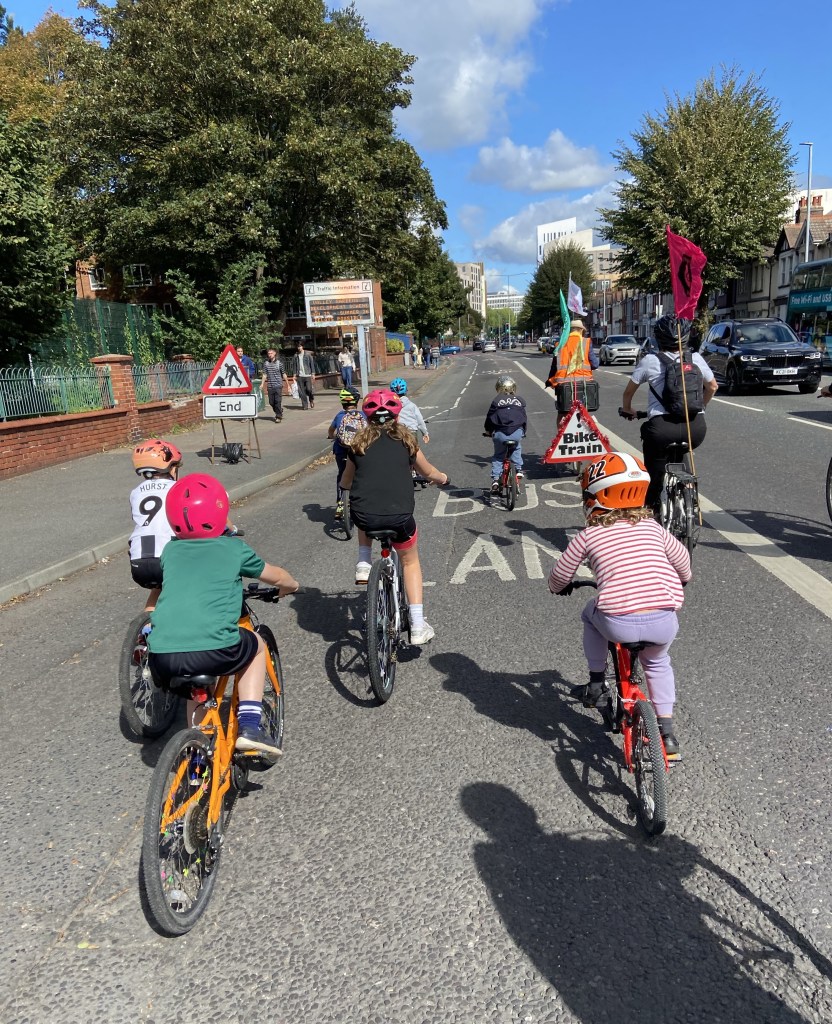
I especially enjoyed getting to and from Stanmer Park by joining a Kidical Mass Bike Train, which I only found out about because one of my fellow choir members was a steward. There’s something incredibly liberating about reclaiming the road from cars to allow kids the simple joy of cycling safely to a park, albeit with the underlying melancholy that this is extraordinary rather than everyday.
There were a couple of idiot impatient drivers, aren’t there always, but for the most part people treated us with respect. The massive queue of drivers queuing along Lewes Road in the other direction, seemingly happy to spend a decent chunk of their Sunday lunchtime in a traffic jam, gawping at us with slack-jawed amazement was another indication that car culture has reached a strange apex.

It is an impossible failure of imagination to assume that two tonnes of metal and plastic is the most sensible way to transport each and every human around a city as small as Brighton, and it’s time our council starts taking the scourge of the SUV-brained individual more seriously.

 jamesofwalsh
Leave a comment