“Once you’re tired of London, you’re tired of life,” as my Dad once told me, quoting Samuel “L” Johnson out of Blackadder.
He didn’t tell me this was a quote, of course. I found this out much later. And I didn’t know the full quote until now: “When a man is tired of London, he is tired of life, for there is in London all that life can afford.”
Afford is the nub. London will price us all out in the end. My closest family are gone or going; my remaining aunties wonder where their kids will end up, and know that it won’t be the city they grew up in and took for granted.
My friends, meanwhile, exist in three distinct groups: those lucky enough to have had help buying a place from their parents, those just about hanging on, and those who have already fled – to deepest Kent, or to Cardiff, Manchester or Glasgow for those who can’t quite give up the feeling of the city.
There isn’t anywhere quite like London, and I’ve lived there or thereabouts for most of my life. But you can understand my bittersweet feelings towards it. A wise man [1] once wrote:
“London might be compared to some organism which sloughs off its old skin, or texture, in order to live again. It is a city which has the ability to dance upon its own ashes.”
Once the dance ends, the city may live again. But London needs people. And most of them now cling to the edgelands, coming in to clean, deliver, and gaze up at the empty deposit boxes in the sky.
My route took me up, through, and past a thousand memories. 7am Tooting, where I once lived above a JD Sports with Eva. [2]
Clapham Common, and the cafe I met Len before Dawn Foster’s funeral. [3]
Clapham North, and cartoonist James Turner’s flat, where a condom wrapper was found in the bathroom. The following day he texted asked if it was mine.
I could, and shouldn’t, go on.
The route to London is along the cycleway formerly known as Cycle Superhighway 7, one of Boris Johnson’s dangerous, blue paint bike expressways. It follows the northern line all the way to Elephant and Castle, along some slightly better, segregated lanes that took many protests and die-ins to achieve. [4]
And so over London Bridge, and a nice view of a modern warship docked alongside and dwarfed by HMS Belfast.
I turn east onto Fenchurch Street, and pick up another cycle superhighway from Aldgate. Through Whitechapel, where I lived happily for a few years, despite it being a “no-go zone” for non-Muslims according to far-right influencers and American politicians. Mainly I remember cheap cafes, kind neighbours, and ice cream parlours hosting awkward local teenagers into the early hours.
The blue paint took me all the way to Stratford, where I turned off onto The Greenway, a nice off-road path that runs atop Joseph Bazalgette’s Northern Outfall Sewer. It poops touring cyclists out of London as efficiently as the Victorian pipe sends excrement to the sea. [5]
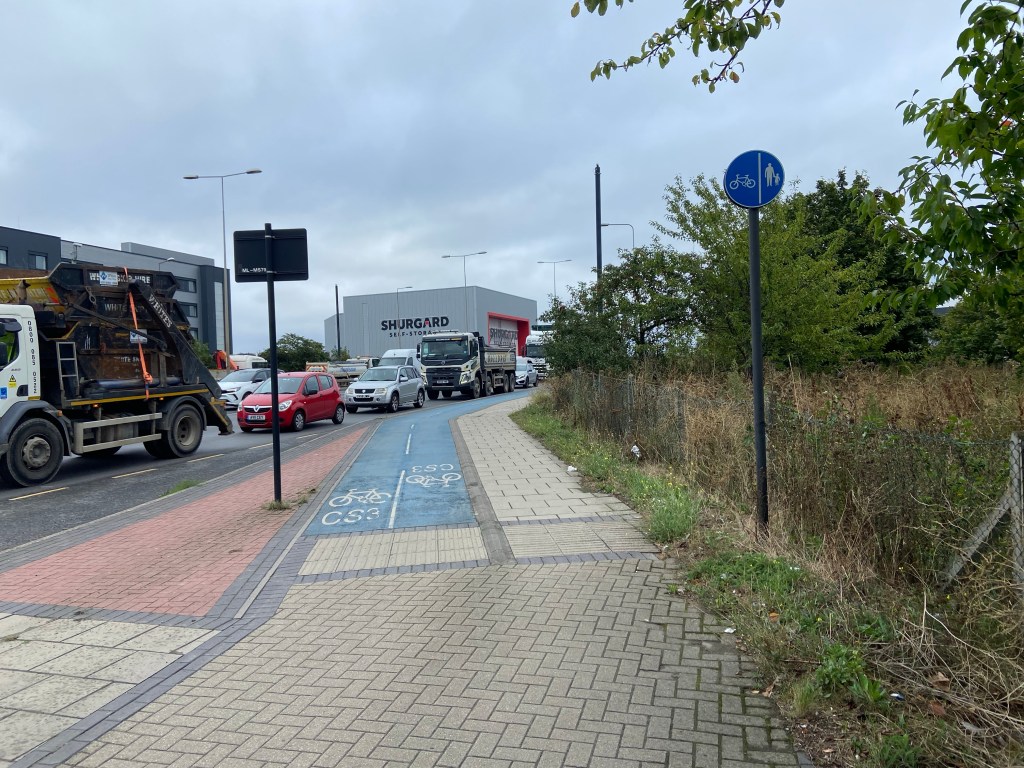
From here, it’s a grim old slog via Newham Way, an arterial road bringing a dizzying amount of cars and lorries into London.
As a cyclist, you are placed on some blue-painted pavement mere inches from the motorway, and at some time, somewhere, somehow, this design was signed off by actual humans for other humans to use.
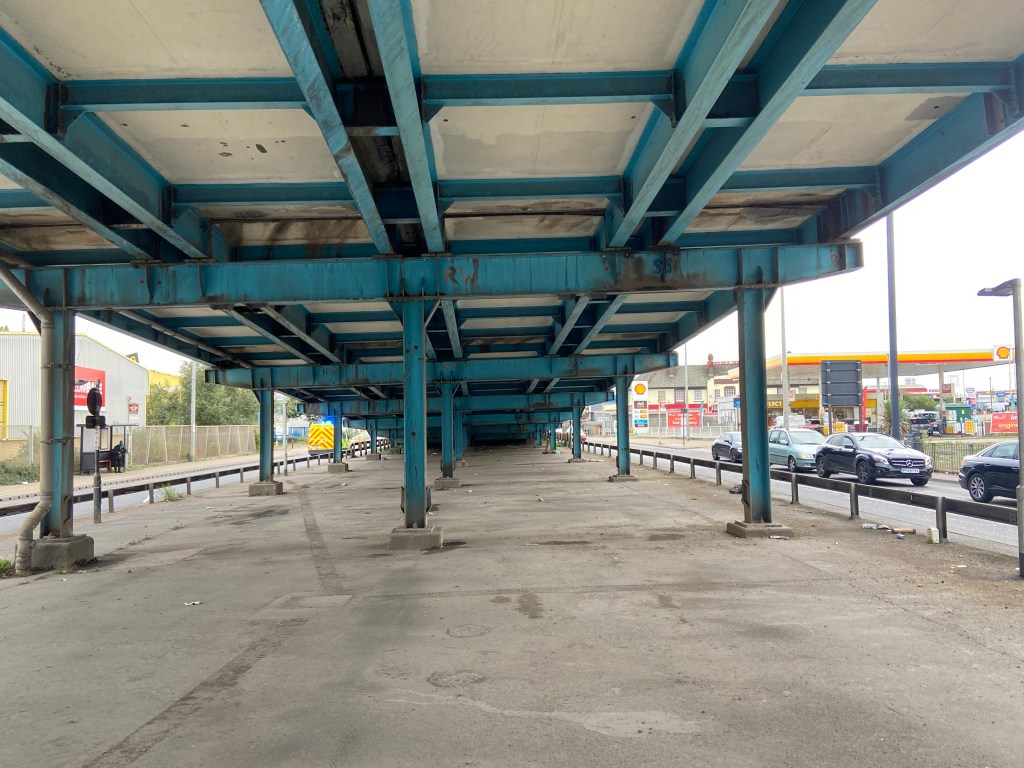
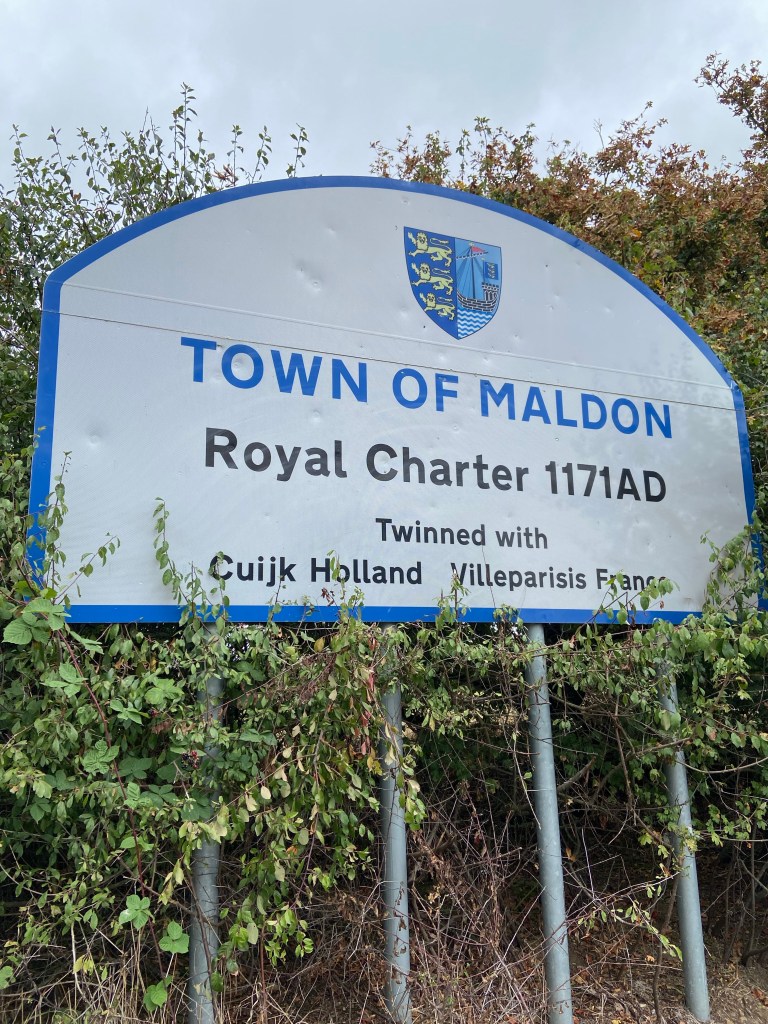
Past Becontree, London begins to merge into Essex. The actual border of Greater London is clear and distinct, but Essex is a state of mind. A moveable feast.
Does it begin at the Upminster Windmill? The British Legion in Cranham advertising future acts including “Lord Toffingham” and a “Poppy Dance”? [6] Or that bit where you finally see greenery and think you’ve reached the countryside, then realise it’s a golf course?
It’s hard to say.
I cycled past a few potential dogging sites, headed over Southend Arterial Road through some pretty-ish countryside sadly popular with fly tippers, and then experienced the most unsettling encounter of the whole day.
I was on the outskirts of Billericay, and was trying to figure out whether “left” or “right” would get me there.
A man in a quilted jacket suddenly appeared out of some woodland and marched purposefully towards me. If I had to describe him to a 90s comedy fan, I’d say he looked the spitting image of a Rowley Birkin QC as played by Paul Whitehouse, were he ever very, very sober.
I said “hello! Is this the right way to Billericay?”
He confirmed this, and went on to say that this was one of the most dangerous stretches of road in Britain. “You know why? The Boy Racers.”
This I could well believe. He went on:
“Two young boys – young boys, barely twenty – from round here, nice boys; barely passed their test and then drove into a tree.
“And do you know what my dad always said to me?”
I said I didn’t.
“The tree always wins”.
At this point, I made a tactical error. What I should have done was thanked him, and cycled off. Instead, I told him his accent was unusual and I couldn’t quite place it.
There followed a full life story, one of pain and misery and frustration. A military father from Ireland of the Protestant kind. An unhappy childhood in “Africa”. And then, the most extraordinary outpouring of racial slurs I have ever heard.
And what did I do? I just cycled off. I didn’t challenge him, or question why. I just cycled, felt a coward, and placated myself by thinking a) he won’t change and b) he will probably not be long for this world.
The rest of Essex is a bit of a blur of bad drivers and forgettable country lanes. The main theme, when I did stop, was loneliness: not just the racist man, desperate to tell his life story (and utter slurs). I saw it in supermarkets, and in chain coffee shops. Retired people with no one to talk to, being kindly listened to and taken seriously by people on minimum wage.
The final town before the ferry was Colchester. Boarding wasn’t until 9pm, so I had a bit of time to kill, and a broken phone to fix.
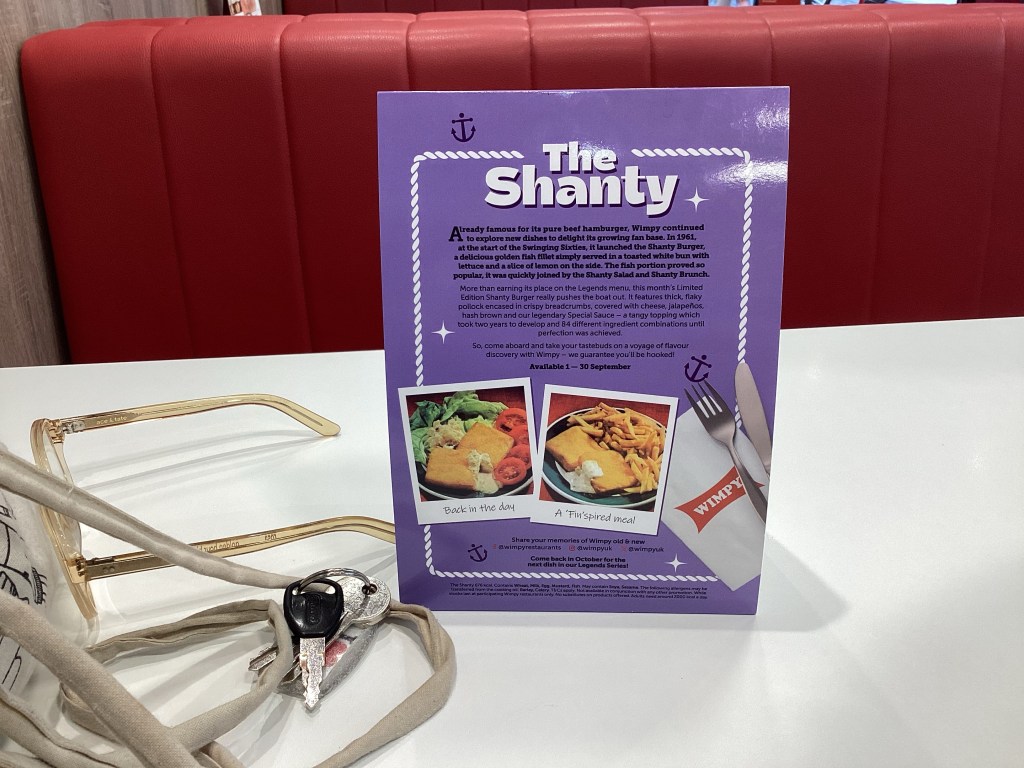
I had a Wimpy – of course there’s a Wimpy in Colchester – and was warned to choose a booth where I could still see my bike.
And I went to get my phone fixed and a combination phone repair and vape shop near the church.
The phone side of the business was run by a deadpan Asian man, very businesslike and frank. While he was serving me, some local kids came in with some quite obviously stolen speakers.
“Sorry,” he said. “We buy everything but speakers.”
The vape shop guy, on the other hand, was rat faced, listless. Possibly suffering from the early stages of scurvy.
He had no customers, so busied himself gently winding up the phone guy.
“Where’s my chair? We used to have two chairs.”
“The other one broke”.
I could have watched these guys for hours. I’d happily watch a semi-improvised sitcom based on their lives, although in the sitcom I think they also need to be housemates, for full claustrophobia purposes.
Phone screen sort-of fixed, I fled Colchester and its ever-present undercurrent of impending violence. I hope to never go there again.
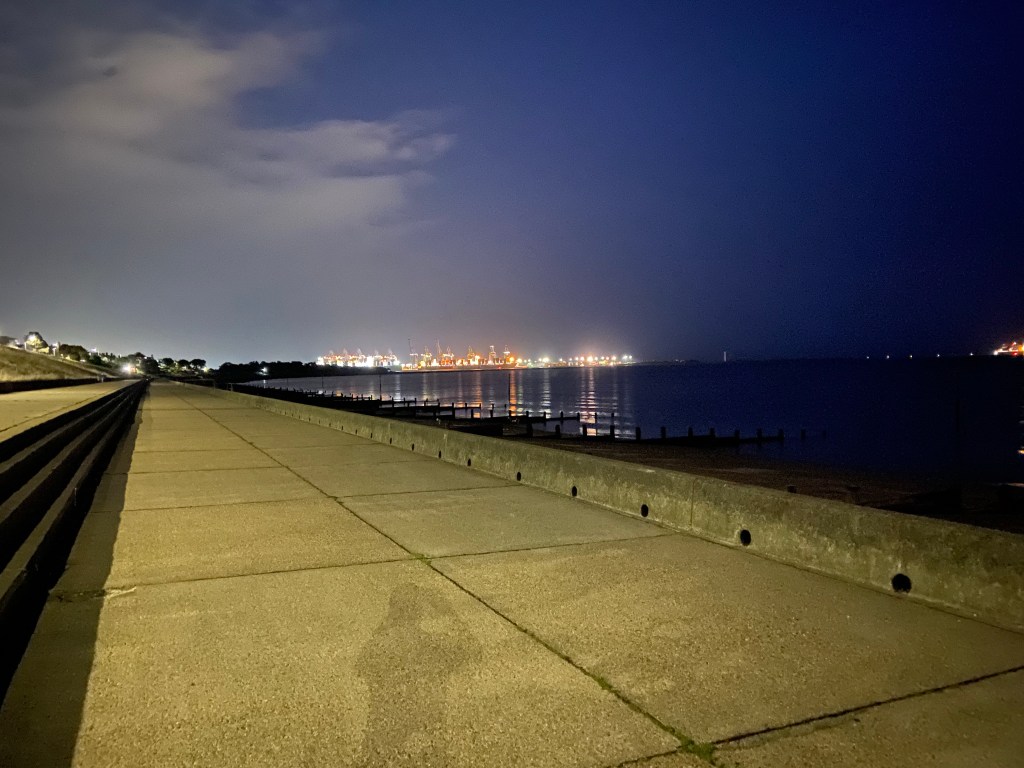
That last ten or so miles from Colchester to the port were actually pretty delightful. I love night cycling, and as the air cooled and the flying insects came out, I luxuriated in the quiet country roads, with the old concrete water towers looming in the dusk, the crescent moon as my companion, past pools of light emerging from welcoming-looking cottages, and tractors and the combines doing their work in the late evening gloom.
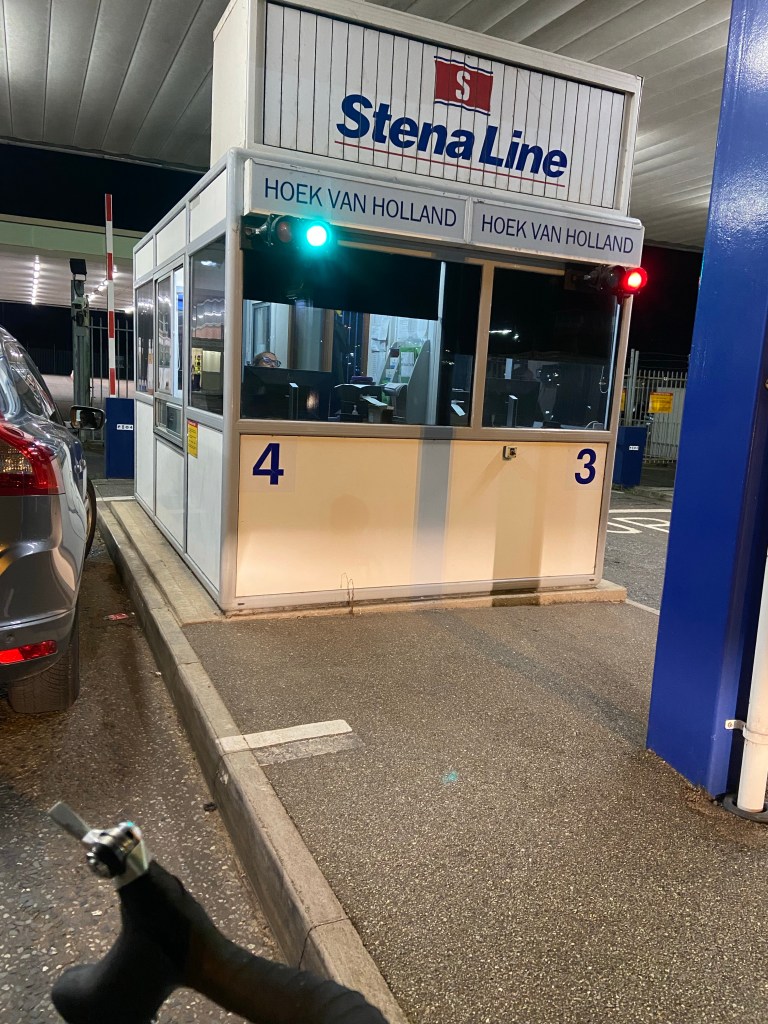
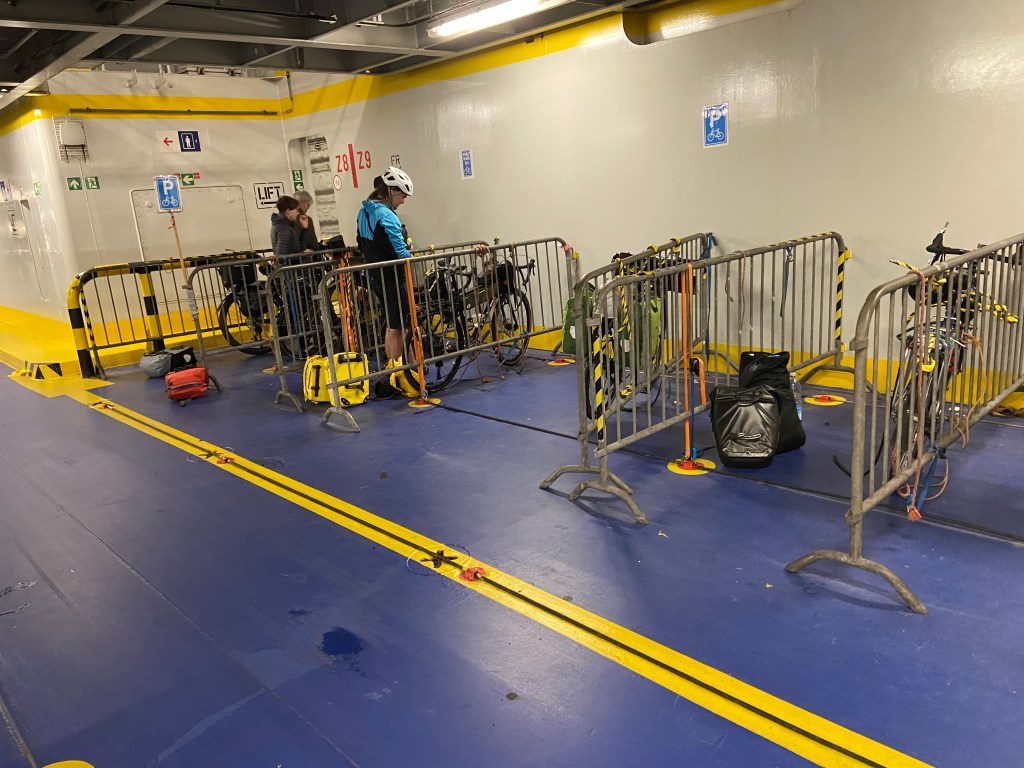
I arrived at Harwich International just as they started boarding. Myself and the other two-wheelers (and one trike) got to board first – up and around a Gerry Anderson style collection of concrete ramps, and then into the belly of our vast ship.
I went straight to my cabin, and slept the dreamless sleep of the truly exhausted.










[1] Peter Ackroyd, London: A Biography.
[2] Eva is now in amazing punk band called Flesh Tetris.
[3] Dawn, a brilliant friend and colleague at The Guardian, died at the far too young age of 34. The funeral was tough, especially due to online abuse: her death was mocked and celebrated by Times journalist Giles Coren, perhaps the least talented and certainly the least pleasant man in Britain.
[4] A die-in is a form of protest where you block the road by lying in it with fellow cyclists, specifically in very dangerous spots where people had been killed and seriously injured. I remember taking part in a Blackfriars Bridge one years ago, before they finally sorted it out and it in proper cycle lanes. Since Just Stop Oil and the media coverage pretty much encouraging drivers to run protesters over, I’m not sure I’d do this form of protest now, or even if it’s “legal”.
Cycling in London is still a hotchpotch of decent lanes and horrible, horrible roads. At the current rate of improvement it will be suitable for parents to cycle safely with their kids by approximately 2077.
[5] A sentence worthy of Google Reviews. Bazalgette was an interesting man, well worth reading up on. I once had a date at one of his shit palaces on the estuary.
[6] I also think this whole area could simply be named THE POPPY ZONE.
 jamesofwalsh
Leave a comment