Home improvements / In our dream home / Home improvements / We’re never moving.
– Straight Life, Black Box Recorder
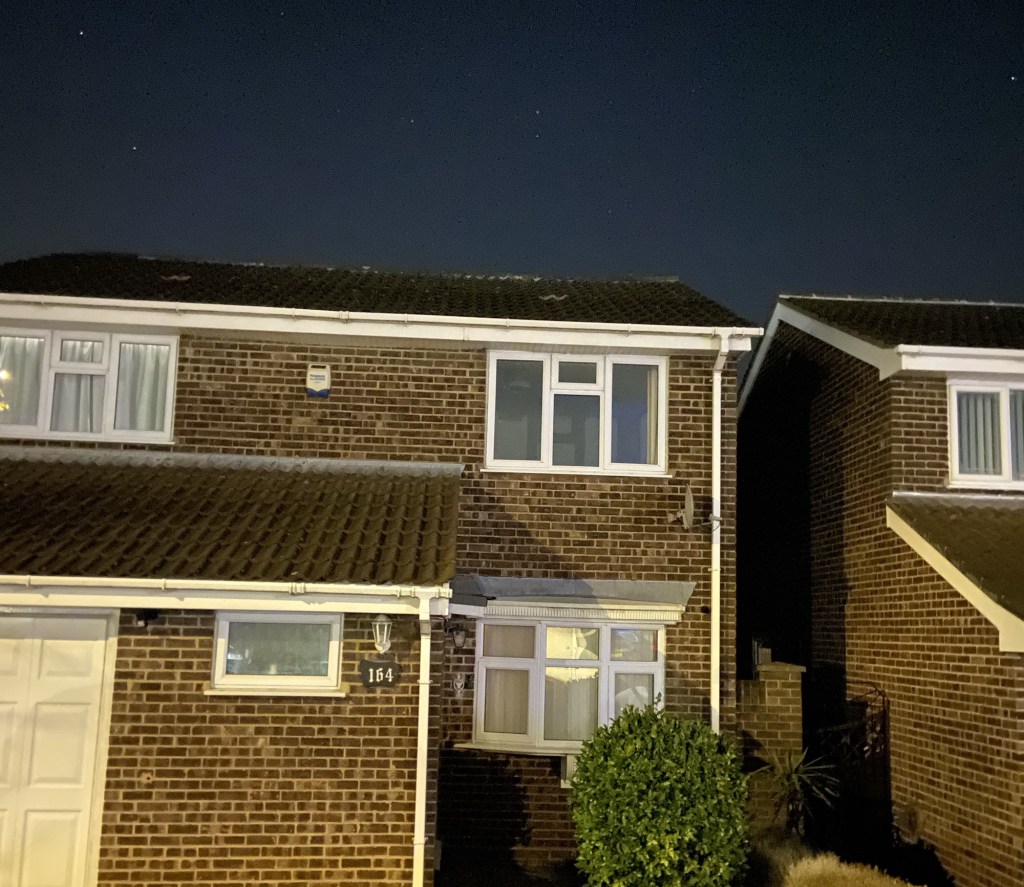
There is something about suburbia I’ve always been running from. It has therefore been instructive to spend Christmas in a semi-detached house on the edge of Luton. [1]
I took a Boxing Day walk, on a cold starry evening, and tried to think through the feelings of dread, despair, and terrible nostalgia [2] that these landscapes always evoke in me.
This is where I grew up, or streets very much like here. Never in the country, never in the town, but in easy reach of both. I played in these streets where, as Blur would put it, “all the houses look the same”.
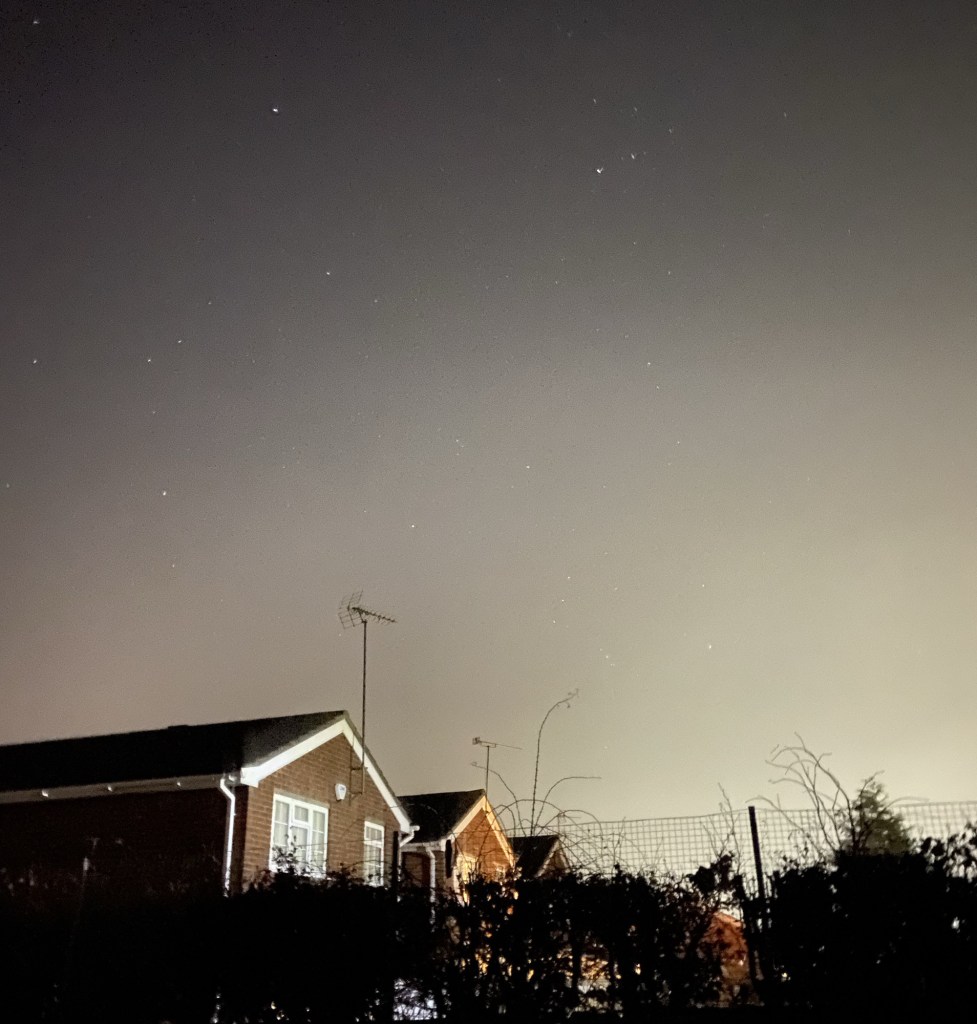
Ideologically, the suburbs are everything I inherently distrust. The design of the more recent edge-of-town estates is pure late-capitalist praxis, with no shops, no parks, no community centres, and barely even any pavements. [3]
As intended, this is Thatcher’s dream of atomised, lonely, individual home ownership, neat, tidy and private. It is miles away from public or communal space, and the possibility of organising or fighting back.
The suburbanite drives everywhere, and has everything he needs driven to him, by people earning next to nothing, via the fulfilment centres by the motorway junction and the dark kitchens posing as Wagamamas on the edge of town.
This is the Barratt Homes generation, who retreated to the outskirts and voted to take away everything they had enjoyed, from free education to cheap housing, from their own children and grandchildren. [4]

Or, as a counterpoint: this is an area filled with happy, loving, and productive people, and I am projecting my own prejudices and fears onto an entire mode of harmless living.
I am on the edge of Luton, but save from the occasional roar of a plane taking off from the nearby airport, this could be anywhere in southern England.
And that’s what terrifies me.
There’s plenty of pop music written about suburbia over the years. We are all familiar with the sound of young radicals sneering at the petty certainties and claustrophobic choices of the majority. [5]
Malvina Reynolds and The Kinks did it best in the sixties – whether Little Boxes or Shangri-La – whereas the eighties champions were the Pet Shop Boys and Bronski Beat.
Damon Albarn spent the 90s writing about the suburbia he escaped; Jarvis and Pulp, in their golden patch, with Russell Senior as their slice of lemon, wrote about sex in crumbling postwar buildings, often involving an assortment of synthetic clothing and furniture.
One of the best and most relentless observers of the English, Luke Haines, mined the quiet desperation of suburbia best on the second Black Box Recorder album, The Facts Of Life. Driving metaphors abound, except there’s nowhere left to drive to; after all, the English Motorway System is beautiful and strange, and there are things we need to talk about.
This all comes to a climax – or rather, a ruined orgasm – on Straight Life, which, after the beautiful and empty refrains of “it’s a beautiful morning!”, we hear a final, brutal verse:
Straight life / Keep Your Mouth Shut / Say Hello to the neighbours
Straight life / Look at our straight life.
On Christmas Day, to work up an appetite for sprouts and stodge, I cycled up out of Luton suburbia into the countryside and villages of Hertfordshire. Villages these days are usually quick to tell you what they’re worried about, via enormous signs and banners by the road if necessary. Here, as in many rural spots, it is the fear of more house building projects coming along. They understand the need for housing, of course. But not here.
A quick glance at the government’s plans, from New Towns that aren’t new towns, and hefty subsidies for the big building conglomerates to build unaffordable “affordable” housing, one thing is for certain: we are marooning many future generations to identikit suburbs on the edge of nowhere in particular.
And no matter how many motorways you widen, these suburbs aren’t going to be very accessible when they’re underwater.
[1] My auntie and uncle live pretty close to the airport, and have done so for many decades. As a kid, I remember they would take me and my cousins to the roof of the terminal where there was a cafe to watch the planes take off and land. You can’t do that any more, because of woke – or possibly because of 9/11. One of the two.
[2] Terrible nostalgia is like normal nostalgia, only more terrible.
[3] For an added tick on the new-build bingo, these are often also built on flood plains. Those shiny automobiles are going to look even uglier when partially submerged.
[4] Thatcher herself bought a Barratt home, although she never actually lived in it.
[5] Or as Rush put it, “nowhere is the dreamer or misfit so alone”.
 jamesofwalsh
Leave a comment