I read somewhere many years ago that Scilly Islanders prefer “the Isles of Scilly” to the Scilly Islands.
It’s interesting how a pointless, possibly untrue fact can shape your imagination of a place. When I’ve thought about Scilly Islanders at all, I’ve thought of them as thin-skinned, Tory-voting, Robinson’s-jam-guzzling curtain twitchers: disgusted of Atlantic archipelago.
I can sort of see why this misnomer is annoying, but in the other direction. It’s such a milquetoast word. Why not go whole hog and call them the fucking stupid islands?
One for the tourist board.
I wonder if this is part of the reason I’ve never visited til now. Certainly the opportunity has been there – I’ve been visiting Penzance for decades, on my way to Alastair’s nest of familial chaos in the beautiful village of Mousehole.
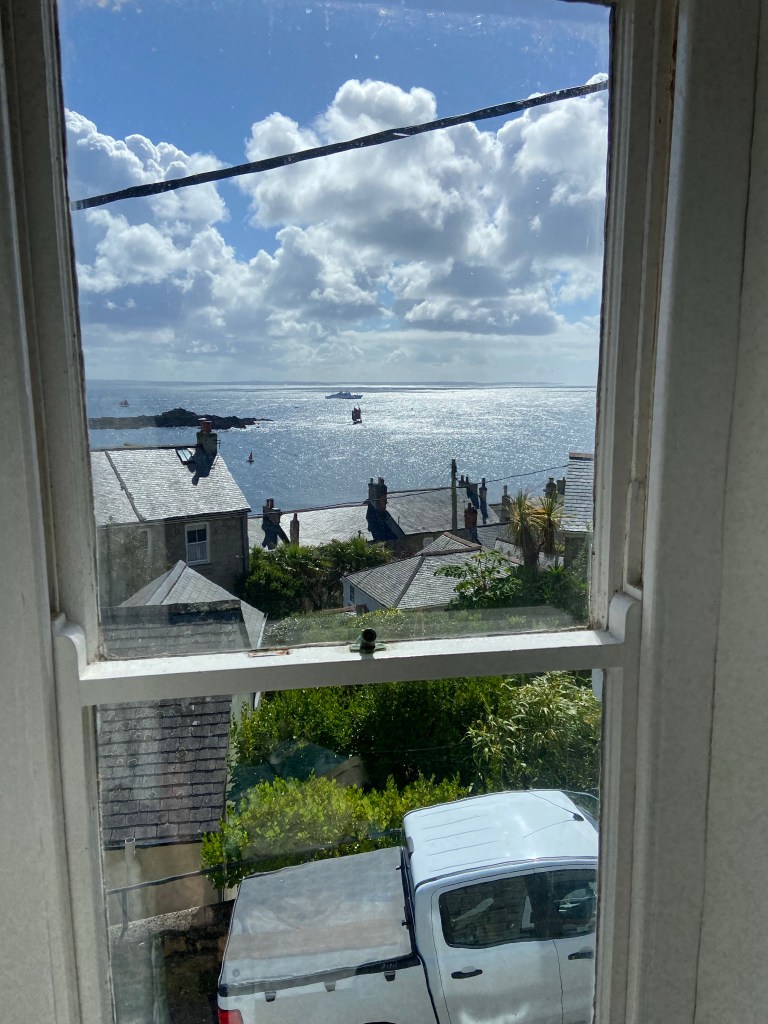
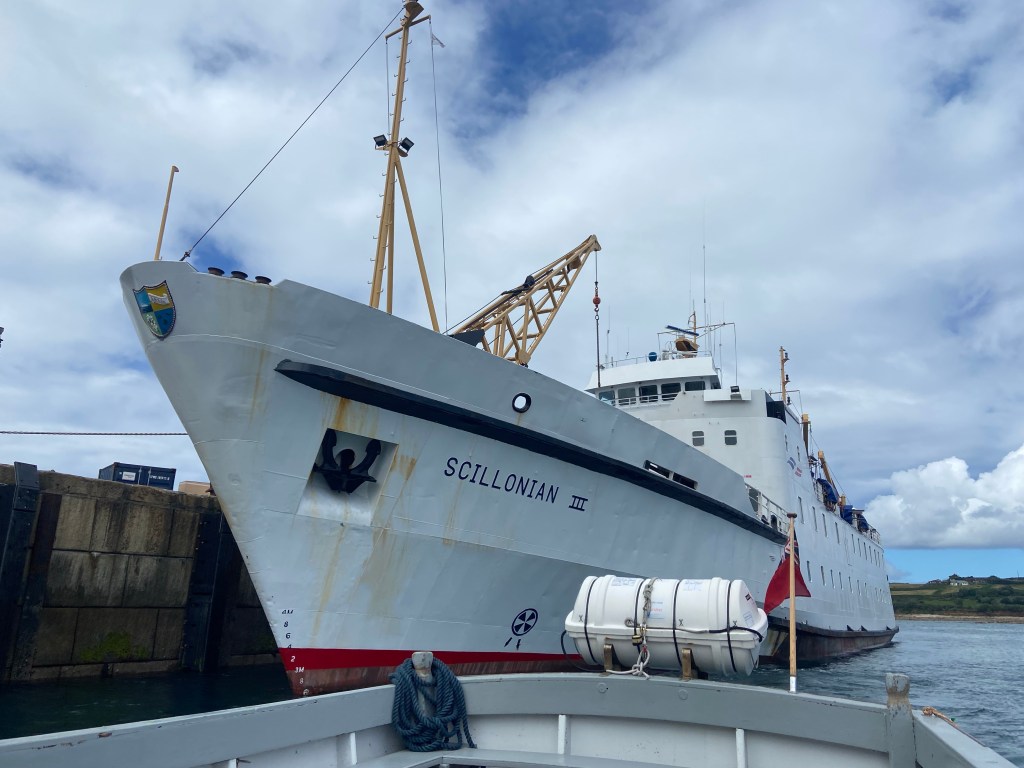
The ship is a beautiful thing. In service since I was born, I’ve heard it’ll be decommissioned soon, which feels inevitable but also slightly melancholy. As soon as she passed Land’s End, the ship rolls appreciably; a more modern ship will ride the waves with less perceptible movement, but also with a lot less grace.

The company charge a mad amount of money to bring your bike on board, but nowhere to lock it up in Penzance port: “most people just lock ‘em to some railings,” said one deckhand, cheerily. I did this, and wandered aboard, thinking of the strongly worded letter I’d write if it disappeared before I got back.
The crossing is 2 hours 45 minutes. There are a surprising number of cafes (2), no bars, and a lovely lower deck for those who want to sleep or avoid the worst effects of seasickness. Sickbags are positioned liberally; we are warned not to flush them down the toilet.

Fortunately I don’t get sick at sea, just in more prosaic places like hatchbacks or national express coaches. I ate a sausage sarnie; I drank a cup of tea. I watched Mousehole, Porthcurno, the Minack and Land’s End fade from our starboard bow.


I settled down to read a 1940s pamphlet warning of the telltale signs of American fascist agitation. I fell asleep.

Soon we were arriving at St Mary’s. As a day tripper without any wheelie suitcases, I got to embark before anyone else. I surged down the harbour arm, like a cork out of a bottle. What seemed like the island’s one police officer, sick of the lack of non-white-collar crime, headed up to meet the day’s mainland reprobates.

This was Hugh Town, the main settlement on the main, most Scilly island.
I had done zero prep for my trip, a man fearing movie spoilers taking his intentional ignorance to new levels. The Co-op was busy, the pubs looked uninviting. Doubling back from what felt like the end of the high street, I met the rest of the ship’s passengers decanting their way towards me, with their hats and their dogs and their opinions.
I had spent eight minutes on St Mary’s and I was done. I headed back to the harbour and the timetable for the “off islands”; aka the not-St-Mary islands.
A flotilla of small boats were huddled at the Scillonian’s prow, waiting to take us to crazy, unknown places.
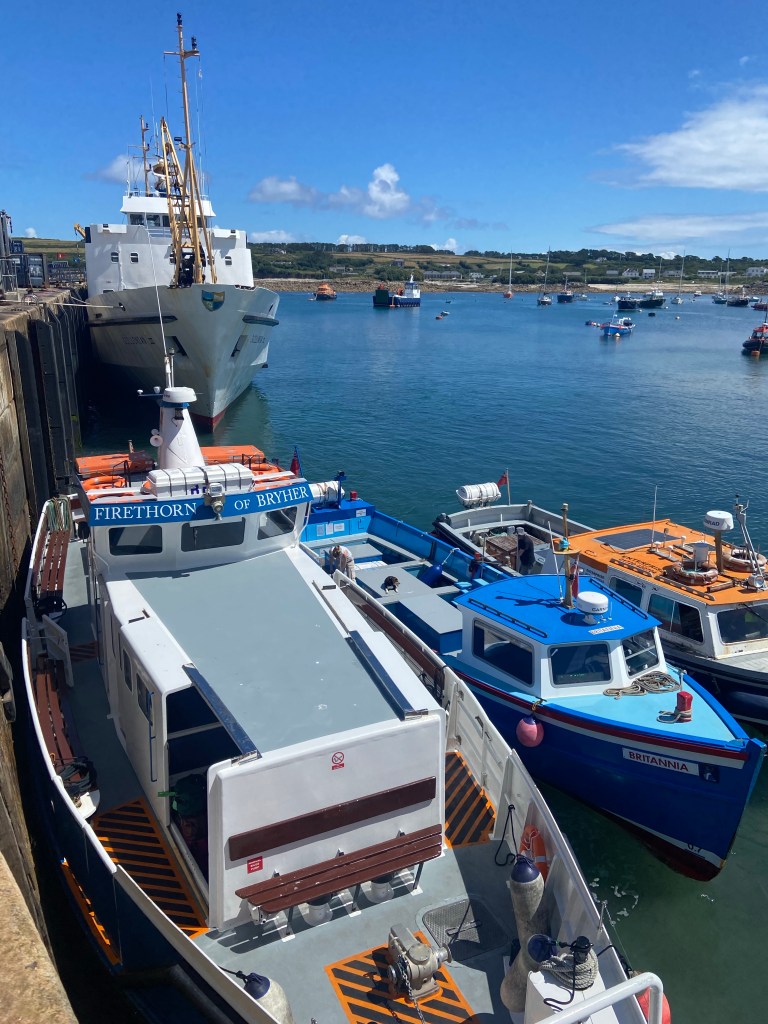
I explained I’d come on a whim.
“What are you after?”, asked one young skipper, holding the smaller of the two ferries together. “Remoteness?”
“I just want to be around as few people as possible.”
“You want St Agnes then. Only six people actually live there.” [1]
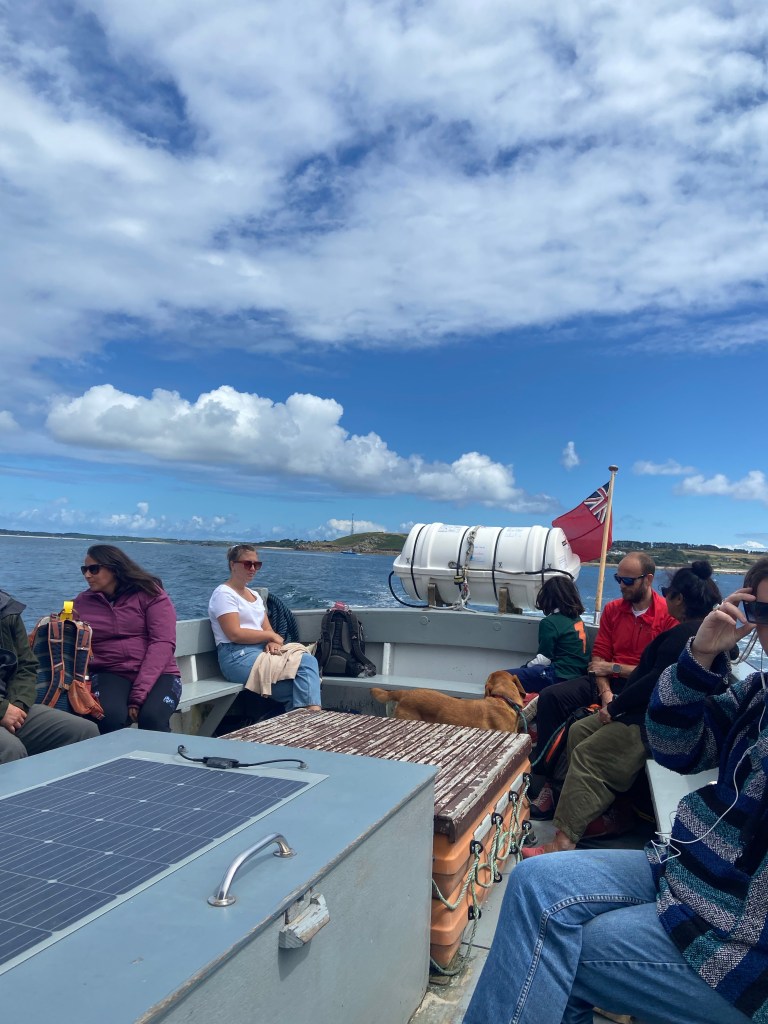
St Agnes is the most westerly island, poking its nose out to the wild Atlantic. Its pub, the Turk’s Head, is therefore Britain’s most south-westerly boozer.
“You’ve made the right choice. Trego is a bit posh, whereas this one has a sense of community,” said the barman, a seasonal worker and student from Falmouth who was camping with other young pub staff on the other side of the island.
I walked across the sandy tombolo to Gugh, surprisingly a small island and not a Klingon stew. Here, I stumbled upon a 3,500 year old menhir, “The Old Man of Gugh”, and Britain’s most southerly standing stone.
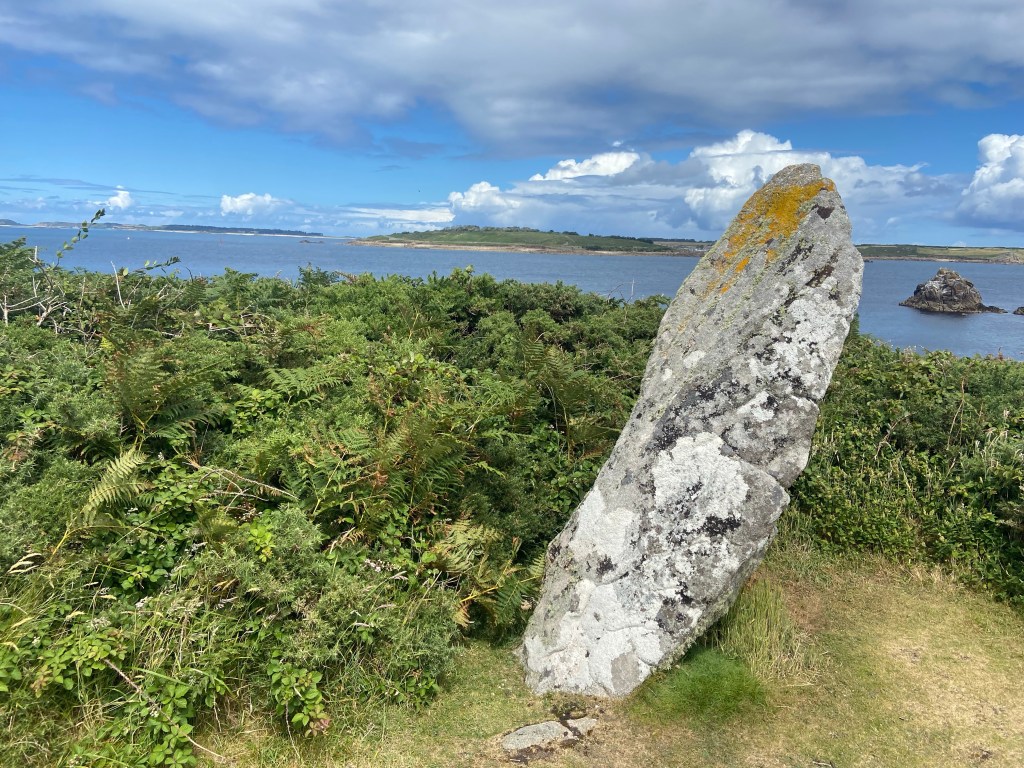
I climbed some rocks, and headed back to St Agnes, a veritable metropolis by comparison. I walked to the lighthouse, no longer in use. Just up the land from it, though, I found my dream home:
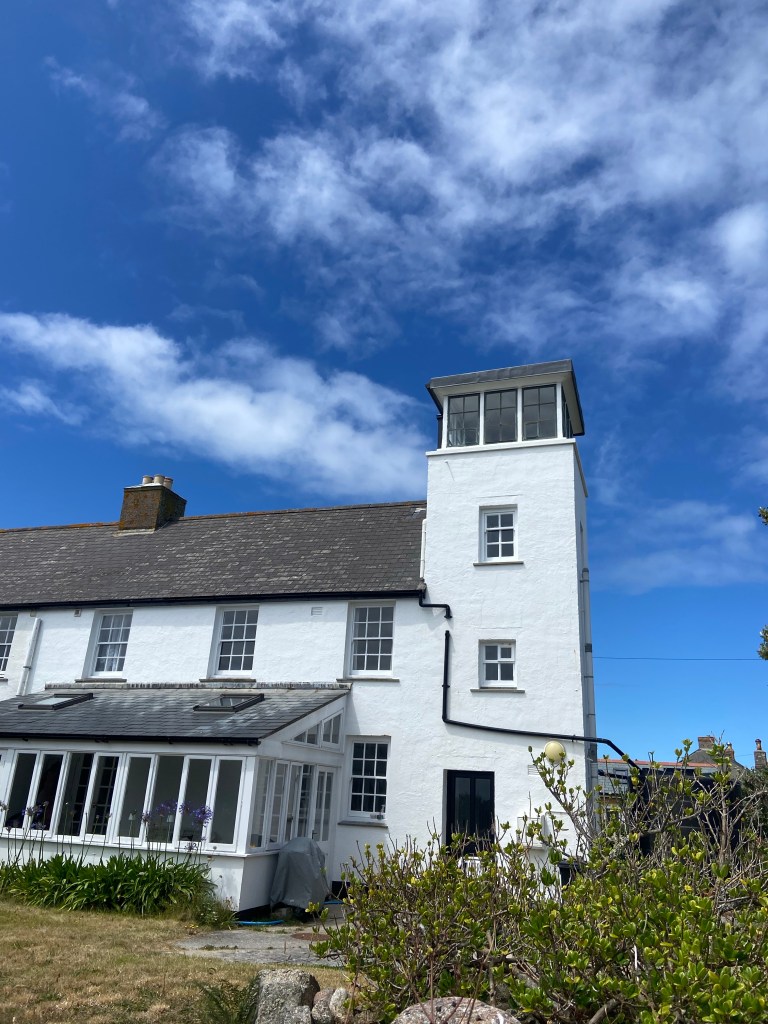
Now *that’s* a lookout.
What would I do if I owned that house? Well, I’d grow an enormous beard, for one. I’d let the garden become all overgrown with weeds and thorns. I’d scream inhuman screams, and fill each room with a different type of shellfish.
I’d stumble back and forth by candlelight, and look out at the sea naked on stormy winter nights.
I’d think of the islanders of days gone by who earned their living as pilots for ships coming in from the Atlantic, using their knowledge to guide them past the treacherous local rocks. And I would paint strange frescos of days gone by and quixotic warnings of what is to come.
I wouldn’t be great for the local tourism industry.
Or would I?


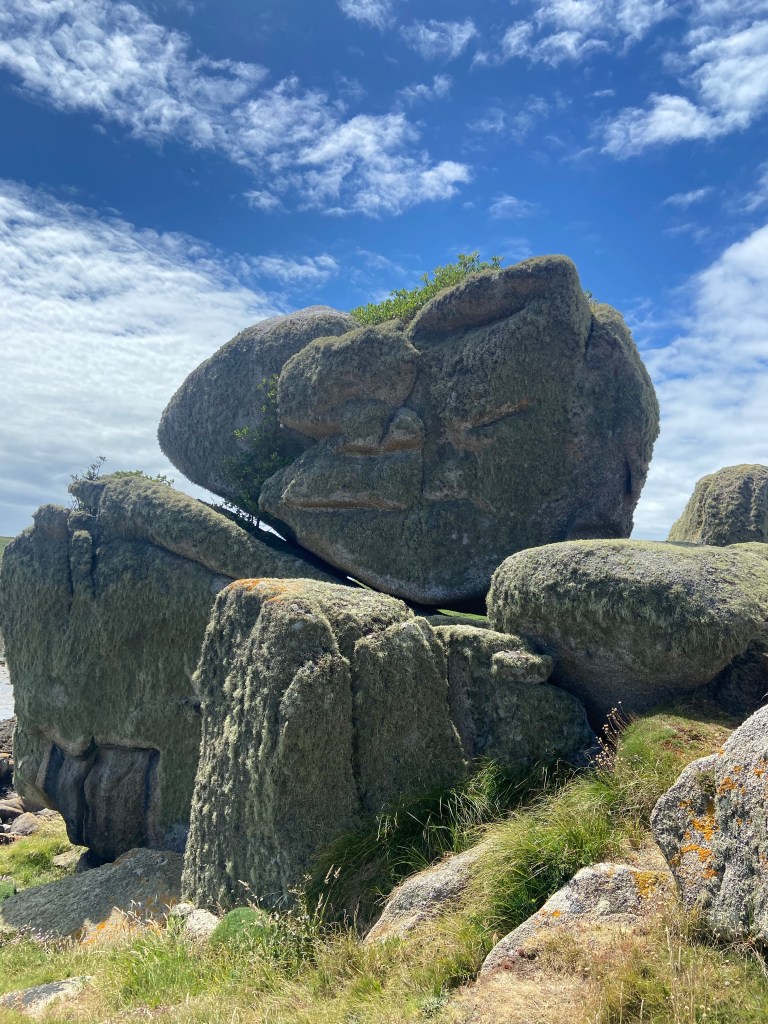

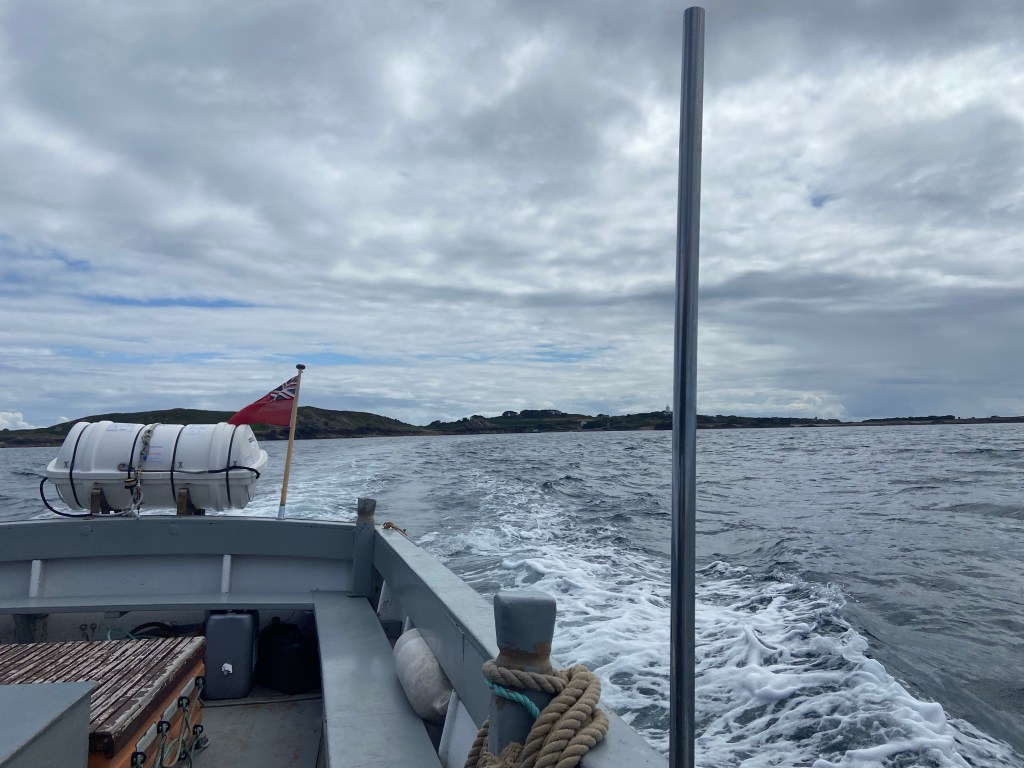
[1] 85, according to the most recent census.
 jamesofwalsh